Show/hide main menu

News

News Highlights

Gene gives cells a 'safety belt' against genetic damage

Posted on 22/03/2012
cellpictureedit

CHMP4C localisation (green signal) at the site of abscission

Researchers at King’s College London have identified a gene which offers cells a ‘safety belt’ against genetic damage by stopping them dividing at the wrong time.

DNA damage is a common cause of cancer and by identifying a significant element of the cell division process, the study could help identify new cancer research paths.

In a study published in Science Dr Jeremy Carlton and Dr Juan Martin-Serrano, from the Department of Infectious Diseases, found that the gene CHMP4C ensures cells divide at the right moment in the separation process, preventing DNA damage.

When cells separate they undergo a process known as abscission, a mechanism which physically divides the cells. Before the process can be completed an ‘abscission checkpoint’ prevents the cells separating while chromosomes are trapped at the abscission site, rather than being fully transferred into the new cell. Chromosomes become trapped in around five per cent of divisions and this can cause DNA damage. 

CHMP4C is the gene responsible for temporarily stopping the abscission process until any ‘lagging’ chromosomes have been segregated into the new cells.

The study also showed cells lacking CHMP4C undergo abscission at a much faster rate, making DNA damage accumulation more likely than when the gene is present.

It was already known that a protein called Aurora B regulates the genes responsible for the ‘checkpoint’ process, but which genes it targets had not been identified until now. This study shows that the CHMP4C gene is activated by Aurora B and plays an essential role in the mechanisms governing the timing of the abscission checkpoint, acting as a ‘safety belt’ against genetic damage.

Dr Martin-Serrano said: ‘This is a really exciting new discovery. By identifying the role of this gene, it sheds a light on the mechanism at the very end of the cell separation process.

‘As genetic damage to cells is a major cause of cancer, understanding the process by which cells divide safely is of great importance.’

The research opens up a new avenue to study the basic mechanisms that prevent DNA damage during the last stages of cell division. Future studies will investigate whether the inactivation of CHMP4C, due to a mutation, might cause cancer. The researchers intend to study the gene’s activity in tumour cells to establish this theory.

The full paper, ESCRT-III Governs the Aurora B-Mediated Abscission Checkpoint through CHMP4C, is available on request.

For further information please contact Emma Reynolds, Press Officer at King’s College London, on 0207 848 4334 or email emma.reynolds@kcl.ac.uk.

For more information about King’s see our ‘King’s in Brief’ page.

Rss Feed Atom Feed

News Highlights:

News Highlights...Rss FeedAtom Feed

Magna Carta set for 21st century treatment

Magna Carta set for 21st century treatment

Description
Researchers at King's College London will collaborate in an examination of the 1215 Magna Carta, which will result in the first clause-by-clause commentary on its content in a hundred years.
Life and legacy of Lister at King's

Life and legacy of Lister at King's

Description
A conference celebrating the life of pioneering surgeon, and King's Professor, Joseph Lister is taking place at King's this week.
From Maxwell to Higgs: the history of physics

From Maxwell to Higgs: the history of physics

Description
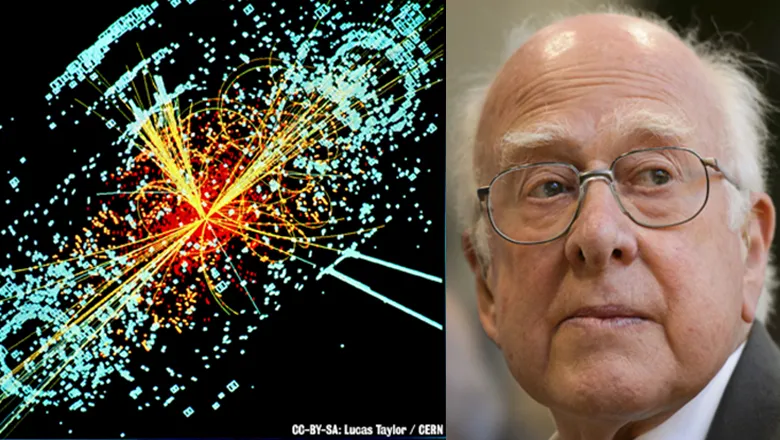
King's alumnus Peter Higgs, who first proposed the 'Higgs Boson' particle, joined forces last week with John Ellis, King's Clerk Maxwell Professor of Theoretical Physics, in a public lecture to celebrate the history of modern physics.

Share this story:

add

Follow Us

@kingscollegelon

Live Twitter feed...

@kingscollegelon
  • KingsCollegeLon: Dr Ami Abou-bakr, an expert on US disaster response management, is discussing the #Oklahoma tornado now on @SkyNews: http://t.co/7xJrovjXaI04:41 PM May 21st via web
  • KingsCollegeLon: RT @KingsIoP: New research finds that childhood maltreatment increases risk of adult obesity http://t.co/ZH6WOYM2On by Dr Andrea Danese @st…03:24 PM May 21st via web
  • KingsCollegeLon: RT @MSc_EI: The #MSc in Early Intervention in #Psychosis is accepting applications for 2013/14 until 1st September, find out more:http://t.03:21 PM May 21st via web
Join the conversation
Sitemap Site help Terms and conditions Accessibility Recruitment News Centre Contact us

© 2013 King's College London | Strand | London WC2R 2LS | England | United Kingdom | Tel +44 (0)20 7836 5454