Show/hide main menu

News

News Highlights

Tackling international air pollution

Posted on 10/05/2012
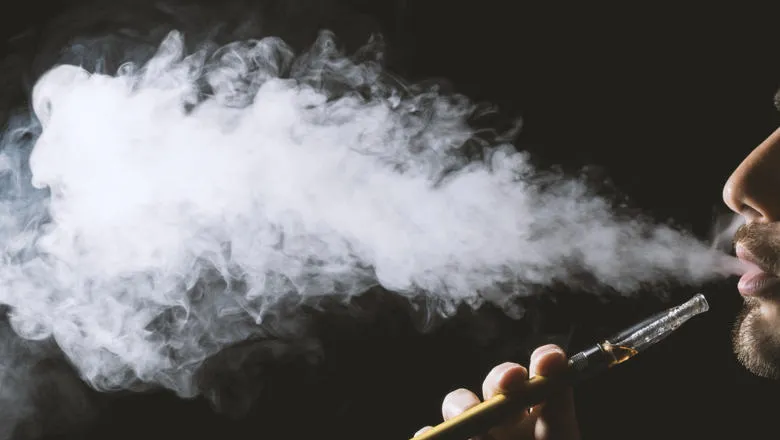
pollutionimage

A panel led by Professor Martin Williams of the Environmental Research Group at King’s has reached an international agreement to update the ‘Gothenburg Protocol’, setting more ambitious targets to reduce trans-boundary air pollution across the northern hemisphere.

The Executive Body of the UN Economic Commission for Europe (UNECE) Convention on Long Range Transboundary Air Pollution (CLRTAP) have revised objectives for the Protocol that will see a reduction in EU emissions of around 60 per cent for sulphur, 40 per cent for nitrogen oxides, 30 per cent for volatile organic compounds, 6 per cent for ammonia and 20 per cent for particulate matter by 2020 compared with 2005.

The Protocol, adopted in 1999, set emission ceilings for pollutants on the basis of scientific assessments of pollution effects and abatement options.

The revised text of the Protocol includes national emission reduction commitments for main air pollutants to be achieved in 2020 and beyond. An emission ceiling for fine particular matter – the pollutant whose ambient air concentrations notoriously exceed air quality standards throughout Europe – will be included for the first time. It also sets tight limits for specific emission sources such as electricity production, cars and lorries.

Professor Martin Williams, Chairman of the Executive Body, said: ‘We made several important strides in a historic agreement last week in Geneva where Parties to the Gothenburg Protocol agreed an amended version, breaking new ground in three important areas.

‘It is the first international treaty to deal with the so-called ‘short-lived climate pollutants’ – toxic air pollutants which can also significantly affect the earth’s climate; secondly, for the first time, an international agreement sets emission ceilings for PM2.5 the most important air pollutant in terms of human health; thirdly the agreement should be sufficiently flexible that Eastern European countries, including the Russian Federation should be able to join the Protocol, which already includes the 27 EU countries, Norway, Switzerland and the USA among others.’

It is thought the new revisions will have a major global impact on health, the environment and climate change.

For further media information please contact Emma Reynolds, Press Officer emma.reynolds@kcl.ac.uk

For further information about King’s, visit our ‘King’s in Brief’ page.


Rss Feed Atom Feed

News Highlights:

News Highlights...Rss FeedAtom Feed

King's at Cheltenham Festival

King's at Cheltenham Festival

Description
A host of experts from King's College London will take part in The Times Cheltenham Science Festival once again this year.
Study shows dental implants may cause damage

Study shows dental implants may cause damage

Description
Experts from King's College London have warned that cases of permanent nerve damage caused by dental implants could rise further if steps are not taken to address risks and prevent injury.
USP Graduate School visit

USP Graduate School visit

Description
A delegation of senior academics from University of São Paulo (USP) – one of King's international strategic partners – recently spent a week at King's hosted by the Graduate School, in order to share best practise on doctoral completion rates.

Share this story:

add

Follow Us

@kingscollegelon

Live Twitter feed...

@kingscollegelon
  • KingsCollegeLon: RT @KingsIoP: New research finds that childhood maltreatment increases risk of adult obesity http://t.co/ZH6WOYM2On by Dr Andrea Danese @st…03:24 PM May 21st via web
  • KingsCollegeLon: RT @MSc_EI: The #MSc in Early Intervention in #Psychosis is accepting applications for 2013/14 until 1st September, find out more:http://t.03:21 PM May 21st via web
  • KingsCollegeLon: RT @KingsSSPP: Do you work with children? Take a look @KingsDEPS Child Studies conference http://t.co/u9IURsUq9u #childprotection #childrig…03:02 PM May 21st via web
Join the conversation
Sitemap Site help Terms and conditions Accessibility Recruitment News Centre Contact us

© 2013 King's College London | Strand | London WC2R 2LS | England | United Kingdom | Tel +44 (0)20 7836 5454