
Please note: this event has passed
Organised by King’s Race Research Network in collaboration with the Department of Culture, Media and Creative Industries
Please join us for a joint book launch celebrating recent publications by Dr Clare Carolin and Dr Munira Cheema on 30 June, 5–7 pm, in Bush House (SE) 1.05, King’s College London Strand Campus.
Bringing these two books into dialogue we will explore the role of art and media in shaping, deploying, and contesting state narratives across a range of (post) Imperial contexts.
The authors will be joined by Dr Asif Akhtar (LSE) and Professor Laleh Khalili (University of Exeter). The discussion will be moderated by Jelena Sofronijevic (EMPIRE LINES podcast) and introduced by Dr Jamie Hakim.
Refreshments will be provided.
About Clare Carolin’s book
The Deployment of Art: The Imperial War Museum’s Artistic Records Committee shows through a close reading of artworks, archival research, and interviews how the Imperial War Museum’s Artistic Records Committee was implicated in the ‘propaganda war’ that the British state waged to counteract negative public perceptions of army presence and activity in the North of Ireland after ‘Bloody Sunday,’ and later during Britain’s 1982 campaign to recapture the Falklands/Malvinas from Argentina. The two case studies are painter Ken Howard’s commissions to record Operation Banner in the 1970s and illustrator Linda Kitson’s commission to record the ‘Falklands Campaign’ in 1982. At a time when emergent conceptual and non-object-based art practices were concerned with exposure, concealment, and photographic evidence, the book demonstrates the operational significance of creating pictorial records and utilising art as a tool of warfare and state-controlled conflict narration.
About Munira Cheema’s book
Dissenting Counter-publics in Pakistani Social Media and Cafe Culture analyses how anti-state counterpublics have emerged across mediated and physical spaces in response to state-led narratives of Pakistani identity. Tracing the rise of counterpublic spheres across Twitter, YouTube, and local coffee houses, it examines how these spaces challenge dominant discourses surrounding nationalism, religion, blasphemy, and national identity. By exploring the affordances of both digital and physical publics, the book demonstrates how anti-establishment discourses create new opportunities for deliberation and contestation around the relationship between religion, citizenship, and the Pakistani state.

At this event
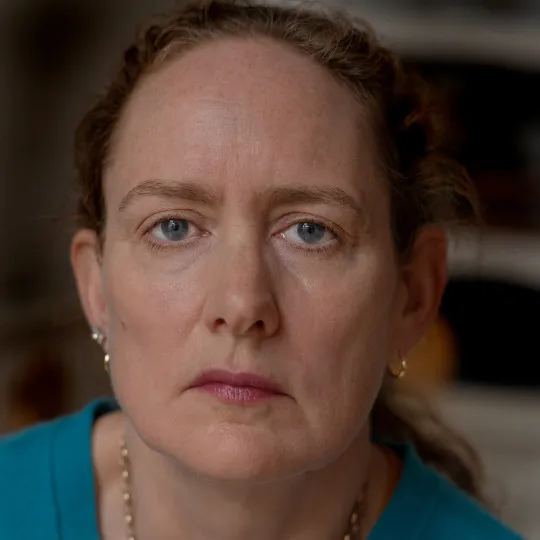
Senior Lecturer in Art and Public Engagement

Senior Lecturer (Associate Professor) in Media, Politics and Culture
Event details
(SE) 1.05Bush House
Strand campus, 30 Aldwych, London, WC2B 4BG