
Please note: this event has passed
German philosopher Peter Sloterdijk’s (2013) notion of “vertical tensions” describes the forces that pull human beings toward self-transcendence, excellence, and transformation.
For him, modern humans are in the situation of having “unscrewed” themselves from a “system of religiously coded vertical tensions that had been in force for millennia” in order to engage in de-spiritualized forms of practice. Such a diagnosis could be traced back to Foucault’s (1984 [1983]) analysis that the decline of rule-bound morality was giving way to a search for a personal ethics realized through practices of the self, and, beyond this, to Nietzsche’s (1974) infamous “Madman” passage.
This symposium will explore the vertical tensions in contemporary skilled (or skilful) practices (Dreyfus, 2004), which involve the refinement of perceptual, cognitive, and motor faculties (Runswick, Uiga, Ford, Smeeton, & Miller-Dicks, 2026) in a given context. These are taking place in an arguably de-spiritualized fashion: individuals now practice mindfulness shorn from Buddhist ethics and the wisdom tradition (Cook, 2016); seldom do computer gamers see their dedicated play in terms of higher values or accord it the same significance that one might do to a martial art (Goto-Jones, 2016); and the educational cultivation of various literacies may be seen to be conducive only to increasing one’s market value in a competitive neoliberal regime. Skilled practices are frequently tethered to a vocation or professional career where measures of success (Beer, 2016) that chart the course of an individual’s progress are formulaic and limited in their purview.
There are, however, deeper and abiding questions about the nature of the connection between skilled practices and the implications that they may have for an individual’s being, for their relation to self and to others, for their orientation to the world. Practice can be construed as habitual action, where “habit” indicates a patterned manner of the “holding of a specific form over a stretch of time” (Carlisle, 2023). Skilled practices, however de-spiritualized they might appear, can be seen to meet the criteria of “spiritual practices” used by the historian and philosopher Pierre Hadot (1995): as exercises that are the result of the individual’s entire psychism, and which involving sacrifices and privations that entail an entire way of life. These are practices that are fundamentally transformative – they require the individual to act, which is simultaneously also to be acted upon – through disciplined training, productive rest, rigorous self-reflection, studious consultation with mentors. As such, the presence of markers of self-transcendence never seems to be far away.
This symposium invites papers that delve into the specificity of select skilled practices: into what is demanded of the practitioner (Sudnow, 1983); into the nature of the transformations that occur through their pursuit; into the frameworks of meaning-making that individuals and communities create to encompass them (Frankl, 1987; Jung, 2001 [1933]). Why do individuals dedicate themselves to these practices? What are the capacities or forms of attention that are being entrained? What are the ways of life that result? Who or what is being transformed? How can we adjudge the significance of these transformations today? Do some experiences of sustained practice veer into the transcendent or numinous (Murphy & White, 1995)?
The title of the symposium, “de-spiritualized “spiritual” practices”, gestures towards a fundamental ambivalence: many ostensibly de-spiritualized contemporary practices that profoundly shape the life of the practitioner nevertheless involve the existential dimension of how individuals relate to their given condition and can be seen through the lens of, and even as proximate to, the long history of “spiritual practices” (or “technologies of the self” (Foucault, 1988)) that were oriented towards a transformative telos (cf. Leung, 2025). In the Stoic tradition, for example, askēsis meant the transformation of “truth” into a permanent principle of action (alētheia becomes ēthos) for the practitioner (Foucault, 2020 [1994]). Eastern self-cultivation techniques have, as their practical consequence, the achievement of an ethically significant state of “‘no-mind” (Nagatomo, 1993) – the mind-body oneness (shinjin ichinyo) key to peak performance in skilled practices.
There are multitudinous ways in which contemporary skilled practices can be undertaken in the borderlands of the sacred and the profane, the mythologized and de-mythologized, the religious and the secular. The modest aim of the symposium will be to foster discussions around a range of practices and to share critical methods, close analyses, and philosophical frameworks from various disciplines for exploring how to think their “verticality” and transformative significance.
Keynote speaker
Daphne Bavelier is Professor at the University of Geneva in the Faculty of Psychology and Educational Sciences, where she heads the Brain and Learning lab. Her research has focused on brain plasticity and she has argued that playing action video games (first-person or third-person shooter video games) lead to players coming to generalized competences that extend beyond the specific practices that they performed in the games (Bavelier, Bediou, & Green, 2018; Green & Bavelier, 2012). Among the findings, five forms of attention and attentional control (such as more efficient attentional control) were identified in which action gamers outperformed non-gamers. This raises a host of questions about the relation interconnectedness of different practices and the significance of how an individual’s capacitation in one field may transfer into another even if it is unbeknownst to the individual themselves.
Symposium
Each paper will be given 30-minutes, which includes the presentation of the paper and the discussion.
Date: Wed, Oct 21st, 2026.
Time: 9:30-19:00.
Location: River Room, King’s College London, Strand campus. The keynote lecture (17:00-18:30 will take place in the Nash Lecture Theatre and be open to attendees not participating in the symposium. Please see a separate events page for this lecture.)
Programme
The full programme, including presenter abstracts and bios can be found details here.
Attendance
Format: This will be a small, in-person symposium without an online component. Please note that all presenter slots have already been taken.
If you would like to attend, please send a short statement outlining your research interests to the organiser, Feng Zhu. Please note that places are limited.
References
Bavelier, D., Bediou, B., & Green, C. S. (2018). Expertise and generalization: lessons from action video games. Current opinion in behavioral sciences, 20, 169-173.
Beer, D. (2016). Metric power. London: Palgrave Macmillan.
Carlisle, C. (2023). What is Spiritual Practice? In J. A. Simmons, B. E. Benson, & N. DeRoo (Eds.), Philosophies of Liturgy: Explorations of Embodied Religious Practice (pp. 16-25). London: Bloomsbury.
Cook, J. (2016). Mindful in Westminster: The politics of meditation and the limits of neoliberal critique. HAU: Journal of Ethnographic Theory, 6(1), 141-161.
Dreyfus, S. E. (2004). The five-stage model of adult skill acquisition. Bulletin of science, technology & society, 24(3), 177-181.
Foucault, M. (1984 [1983]). On the Genealogy of Ethics: An Overview of a Work in Progress. In P. Rabinow (Ed.), The Foucault Reader: An Introduction to Foucault's Thought (pp. 340-372). London: Penguin Books.
Foucault, M. (1988). Technologies of the Self. In L. H. Martin, H. Gutman, & P. H. Hutton (Eds.), Technologies of the Self: A Seminar with Michel Foucault (pp. 16-49). Amherst: The University of Massachusetts Press.
Foucault, M. (2020 [1994]). Technologies of the Self (R. Hurley, Trans.). In P. Rabinow (Ed.), Michel Foucault: Ethics: Essential Works 1954-84 (pp. 223-252). Great Britain: Penguin Books.
Frankl, V. E. (1987). Man's search for meaning: an introduction to logotherapy. London: Hodder & Stoughton.
Goto-Jones, C. (2016). The virtual ninja manifesto: fighting games, martial arts and gamic orientalism: Rowman & Littlefield.
Green, C. S., & Bavelier, D. (2012). Learning, attentional control, and action video games. Current biology, 22(6), R197-R206.
Hadot, P. (1995). Philosophy as a way of life: Spiritual exercises from Socrates to Foucault (M. Chase, Trans. A. I. Davidson Ed.). Malden, MA: Blackwell Publishing.
Jung, C. G. (2001 [1933]). Modern Man in Search of a Soul. London and New York: Routledge Classics.
Leung, K.-H. (2025). Spiritual Life and Secular Thought: A Phenomenology. Oxford: Oxford University Press.
Murphy, M., & White, R. A. (1995). In the zone: transcendent experience in sports. New York: Open Road Media.
Nagatomo, S. (1993). Translator's introduction (S. Nagatomo & M. Hull, Trans.). In The body, self-cultivation, and ki-energy (pp. ix-xxxvi). New York: Suny Press.
Nietzsche, F. (1974). The Gay Science (W. Kaufmann, Trans.). New York: Vintage.
Runswick, O. R., Uiga, L., Ford, P. R., Smeeton, N. J., & Miller-Dicks, M. (2026). Expert consensus on skill acquisition in sport: A Delphi study. Journal of sports sciences, 44(9), 1203-1214.
Sloterdijk, P. (2013). You must change your life: on anthropotechnics (W. Hoban, Trans.). Cambridge & Malden, MA: Polity.
Sudnow, D. (1983). Pilgrim in the Microworld. Eye, mind and the essence of video skill. New York: Warner Books.
At this event
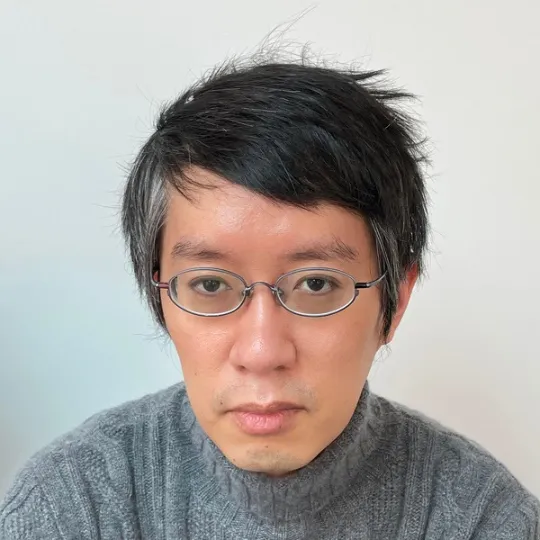
Senior Lecturer in Digital Games and Culture

Professor of Performance and the Humanities
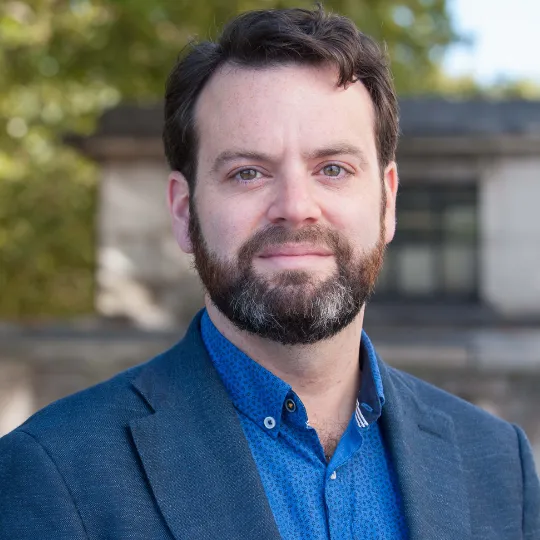
Professor of American Studies

Professor of English

Lecturer in Theology, Philosophy and the Arts

Senior Lecturer in Computational Consumer Culture
Event details
River RoomStrand Building
Strand Campus, Strand, London, WC2R 2LS