
05 November 2026
Meet the King's COP31 delegation
King’s is proud to present a diverse and dynamic delegation of researchers and academics attending COP31 in Antalya.

As the world turns its attention to Antalya, Republic of Türkiye, for COP31, King’s College London is proud to present a diverse and dynamic delegation of researchers and academics whose work spans environmental geopolitics, climate finance, social and environmental justice, adaptation and resilience, climate governance, and more.
Their presence reflects King’s commitment to advancing climate action through interdisciplinary research, policy engagement and global collaboration.
Throughout the conference, the delegates - as well as other researchers from around King's - will provide opinion pieces and updates about the conference via our King's & COP31 series.
Head of King's delegation

Dr Emel Akçalı is an International Relations scholar and Senior Lecturer in the Defence Studies Department, with more than 15 years of experience working on environmental geopolitics. She is excited to participate in COP31 in Turkey as the King's delegation lead, a role that aligns closely with her current research and commitments. Her central interest lies in critical political ecology, examining how questions of power, justice, and ownership shape the ways energy transitions unfold on the ground, and whose voices are heard in the process.
King's delegates
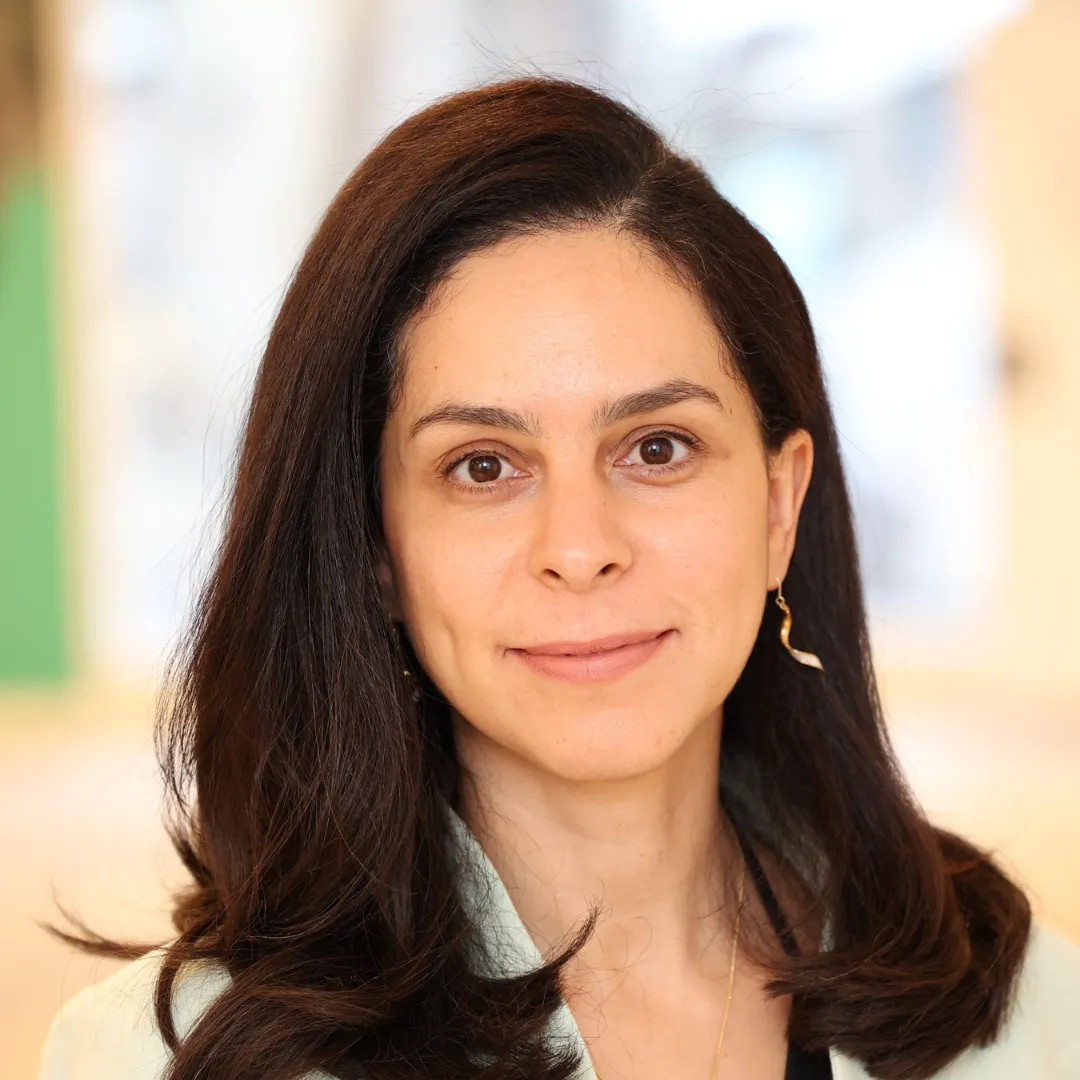
Dr Andreza Aruska de Souza Santos, Director of the King’s Brazil Institute, brings her expertise on mining towns and Brazil’s historical reliance on extractive industries. She sees COP31 as a pivotal moment for implementing climate change strategies, emphasising the vital role of academia in driving action.

Dr Bilkisu Jibrin, a PhD student in the School of Life Course & Population Health Sciences, researches co-developing priority actions on interventions to prevent the adverse health and environmental impacts of artisanal and small-scale gold mining in Nigeria, with a focus on community engagement and multisectoral collaboration. At COP31, she hopes to explore how climate action can better integrate environmental protection, public health and the livelihoods of vulnerable communities, particularly in low- and middle-income countries.

Dr Claudia Horn is a Lecturer in International Political Economy Education in the Department of European and International Studies. Her research focuses on climate finance and uneven development, particularly the impact of market-based climate mechanisms on land access and inequalities. At COP31, she is looking forward to discussions on clean energy transformation and green industrialisation; methane emissions, which are particularly relevant for agribusiness actors; and implementation mechanisms, especially Article 6 and carbon markets.

Dr Clement Sefa-Nyarko, Lecturer in Security, Development and Leadership in Africa at the African Leadership Centre, focuses on justice-centred approaches to critical minerals governance and energy transitions. He hopes to build networks and explore inclusive, forest-focused climate dialogues.

Dr Ewa Karwowski is a Senior Lecturer in Finance and Development in the Department of International Development. Her research focuses on finance and development, financialisation, and comparative political economy across economies and regions.

Dr Maeve Ryan is a Reader in History and Foreign Policy in the Department of War Studies, the Director of the Leverhulme Centre for Slavery in War, and Co-Director of the Centre for Statecraft and National Security. She is the co-author of Convergence: Climate Change and Geopolitical Futures (Edinburgh University Press, 2026) [with Duraid Jalili and Hillary Briffa].

Dr Manuel Rodrigues is a Senior Lecturer in Financial Management at King’s Business School. He has held numerous roles in government and politics, international financial organisations, and at universities across the globe.

Opeyemi Esther Adegburin, PhD student at the African Leadership Centre, researches the colonial patterns of dependency in the green transition as a result of the surging demand for critical minerals in sub-Saharan Africa. At COP31, she is looking forward to gaining deeper insights into how global climate commitments can address green colonialism and prioritise energy transitions that promote African agency and just and sustainable development.

Richard Kalu, PhD student in the Department of Geography, studies insurgency and climate-challenged geographies in Nigeria. His work interrogates how global climate governance intersects with postcolonial conflict and resistance. At COP31, he seeks to reimagine climate action through decolonial and grassroots lenses.

Ruoxuan Li is a PhD researcher in the Department of International Development, specialising in the political economy of carbon markets and carbon finance. Her research examines how states and financial institutions shape carbon offsetting and climate governance, with a particular focus in East Asia. At COP31, she looks forward to hearing perspectives from researchers and practitioners on how mechanisms of carbon finance can support development priorities while delivering credible emissions reductions.
Sele Pretoru-Gogo is a doctoral researcher in the Dickson Poon School of Law, specialising in tax law. Her experience spans government policy, legal disputes/tax litigation and public-sector governance, as well as trusts law; and her ongoing PhD research examines how pension tax law impacts gender disparities. At COP31, she wants to gain a deeper understanding of how international climate commitments translate into effective national policies, and to engage with delegates working across law, public policy and social justice.

Yuetong Guo is a PhD candidate in the Department of Political Economy, researching EU climate governance and carbon markets. Her doctoral research examines how the European Commission shapes carbon pricing for aviation and maritime, and how EU policies interact with international governance. At COP31, she hopes to explore new developments in EU and Chinese climate policy and how they shape international negotiations, particularly on carbon market cooperation and climate finance.

Dr Zeno Leoni is a Lecturer in Defence Studies in the Defence Studies Department, based at the Joint Services and Staff College. His research examines grand strategy, US-China relations, and the implications of a changing international order, as well as developing an agenda of research on resilience and preparedness in the context of national security. He hopes to gain a better understanding of COP31, which he sees as a space for bargain between the Global North and the Global South on the environmental agenda, as well as seeing tangible progress on adaptation and resilience measures.

Dr Zoe Moula is a Lecturer in Mental Health in the Florence Nightingale Faculty of Nursing, Midwifery & Palliative Care and Editor-in-Chief of the International Journal of Art Therapy. Her research explores how nature-based arts and arts psychotherapies can advance human and planetary health, strengthen our connection with nature, and inform responses to climate change. She hopes to build on her work at COP31 by identifying actionable pathways to integrate arts and culture into climate mitigation, adaptation and communication.
King's & COP31
Find out more about King's work around COP31, including expert opinions by our researchers and information about how you can get involved.
Related departments
- King's Sustainability
- Sustainability Hub
- Faculty of Arts & Humanities
- King’s Business School
- Faculty of Dentistry, Oral & Craniofacial Sciences
- The Dickson Poon School of Law
- Faculty of Life Sciences & Medicine
- Faculty of Natural, Mathematical & Engineering Sciences
- Florence Nightingale Faculty of Nursing, Midwifery & Palliative Care
- Institute of Psychiatry, Psychology & Neuroscience
- Faculty of Social Science & Public Policy