
Please note: this event has passed
Join Professor Sylvain Gabriele of University of Mons for a research seminar as part of the Force Talk series entitled "Mechanosensing of epithelial cells: curvature, confinement and memory".
This seminar has been rescheduled for Tuesday 3 March 13:00-14:00.
Hosted by the Randall Centre for Cell & Molecular Biophysics this talk will be held in person and online.
Abstract:
Collective epithelial migration and tissue folding are fundamental to development, regeneration and cancer progression, yet most mechanistic studies rely on large, flat monolayers that poorly capture physiological geometries. In vivo, epithelial cells often migrate as small polarized clusters and continuously adapt to curvature and confinement. Here, we combine engineered microenvironments and live mechanobiology readouts to dissect how geometry controls epithelial mechanics and function. Using photopolymerized wavy hydrogels, we show that substrate curvature directly reshapes epithelial mechanical state and nuclear architecture, revealing tight coupling between geometry, active cell mechanics and nuclear mechanoadaptation. Using micropatterned adhesive stripes, we further demonstrate that geometry alone can dictate the migratory behaviour of single cells and small collectives. Finally, we introduce mechanical memory as a key adaptive mechanism enabling efficient migration in confined environments, mediated by actomyosin cortex reinforcement. Together, these results provide a framework to understand epithelial migration and tumour dissemination in complex tissues.

Speaker:
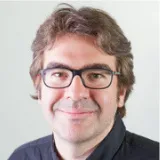
Sylvain Gabriele is a tenured Associate Professor at the University of Mons (UMONS, Belgium). He obtained his M.S. in Physical Chemistry from Sorbonne University (Paris VI) and his Ph.D. in Polymer Physics from UMONS in 2006. He then conducted postdoctoral research at CNRS/Aix-Marseille University in France (Dr. O. Théodoly), where he developed microfluidic tools to study leukocyte migration under confinement, and at Harvard University in USA (Prof. Kevin Kit Parker), where he investigated mechanical signal propagation in biological systems. He joined UMONS as Chargé de Recherche FNRS in 2010 and now leads the SYMBIOSE Lab, focusing on mechanobiology and bioengineered materials. Since 2016, he has served as President of the Research Institute for Biosciences at UMONS. He was Invited Professor at Stanford University (2017) and at the Mechanobiology Institute Singapore (2023). His work has been recognized by the Louis Melsens Prize (2021) and the Adolphe Wetrems Prize (2025), and he was appointed Francqui Research Professor and Nikon Microscopy Ambassador in 2025. The same year, he launched the AdHuCell bioengineering platform with Nikon Europe, strengthening European leadership in advanced 3D live-cell imaging and mechanobiology.
Mechanics of Life Leverhulme DSP Force Talks Series
Force Talks is a seminar series hosted by the Mechanics of Life Leverhulme Doctoral Scholarship Programme at King's College London. We are honoured to welcome world leaders in mechanobiology.
The series aims to showcase the rapidly expanding interdisciplinary field of mechanobiology and mechanical forces. We welcome those from academia and industry to attend and take part in the discussions.

The programme is funded by the Leverhulme Trust doctoral scholarship grant "Understanding the mechanics of life".
Learn more about the Mechanics of Life Leverhulme Doctoral Scholarship Programme
How to join:
This event will take place both in person and online via Microsoft Teams. To join the online meeting click "Go to this event" to join the meeting directly.
If you would like to receive updates on all upcoming Force Talks sign up to our mailing list.
At this event
Professor of Biophysics
Event details
G8New Hunt’s House
Great Maze Pond, London, SE1 9RT