
New science is improving our understanding of how and why heroin/opioid overdose deaths happen. This is a crucially important topic which has been so shamefully overlooked. The speakers at our conference gave tasters of their new studies and of devices and strategies they see as tools for the policymaker and practitioner of tomorrow. Many thanks to our superb, diverse speakers and attendees who explored how we might better understand individual hazard and the relationship with time and place, as well as describing how we can possibly detect the overdose crisis in real-time, as well as innovative treatments or other interventions to prevent the fatal outcome.
Professor Sir John Strang, Chair in the Psychiatry of Addictions, Addictions Department, IoPPN
19 September 2025
Experts gather to discuss innovations and strategies to detect and prevent opioid overdose deaths
On Thursday 4 September, King’s welcomed clinicians, policy makers and researchers to share and discuss the latest innovations and strategies to detect and prevent opioid overdose deaths.

Following Overdose Awareness Day on 31 August, Professor Sir John Strang and Dr Nicola Metrebian welcomed colleagues from the sector to King’s College London as part of the one-day event, “Naloxone Innovations and Other Strategies to Detect and Prevent Opioid Overdose Deaths”. The conference was supported by NIHR Maudsley BRC (Biomedical Research Centre) and the event was part of BRC's Pain and Addictions Theme.
Naloxone is an emergency antidote for opioid overdose, that works by reversing the breathing difficulties caused by overdose. Take-home Naloxone is currently available to people who are suitable trained and have been given a supply of naloxone (e.g. family members, and workforce such as outreach workers and police, as well as people who use drugs themselves) to help save a life in an emergency. Naloxone itself has existed in emergency medicine as an intramuscular injection for many decades, and then as a concentrated naloxone nasal spray in recent years (an innovation with which King’s was centrally involved, along with others).
The conference included an overview of national naloxone provision and expansion from the Department of Health and Social Care, a review of Scotland’s drug deaths, and an outline of overdose innovations in Wales. The day went on to explore new developments in the field of overdose detection and prevention including apps, buddy schemes, wearable technologies and the possibilities of further developments in the methods of naloxone delivery.

The day continued with explorations of research into naloxone and its provisions both in the UK and in Sweden, and looking at real world decision making on naloxone use and dosage. In addition, we learnt from Norway of their challenging proposal for clinical and policy incorporation of an ‘Overdose chain of survival’. The final session also included a lively discussion on what new experimental studies could improve our understanding of opioid overdose and test how we could intervene more efficiently.
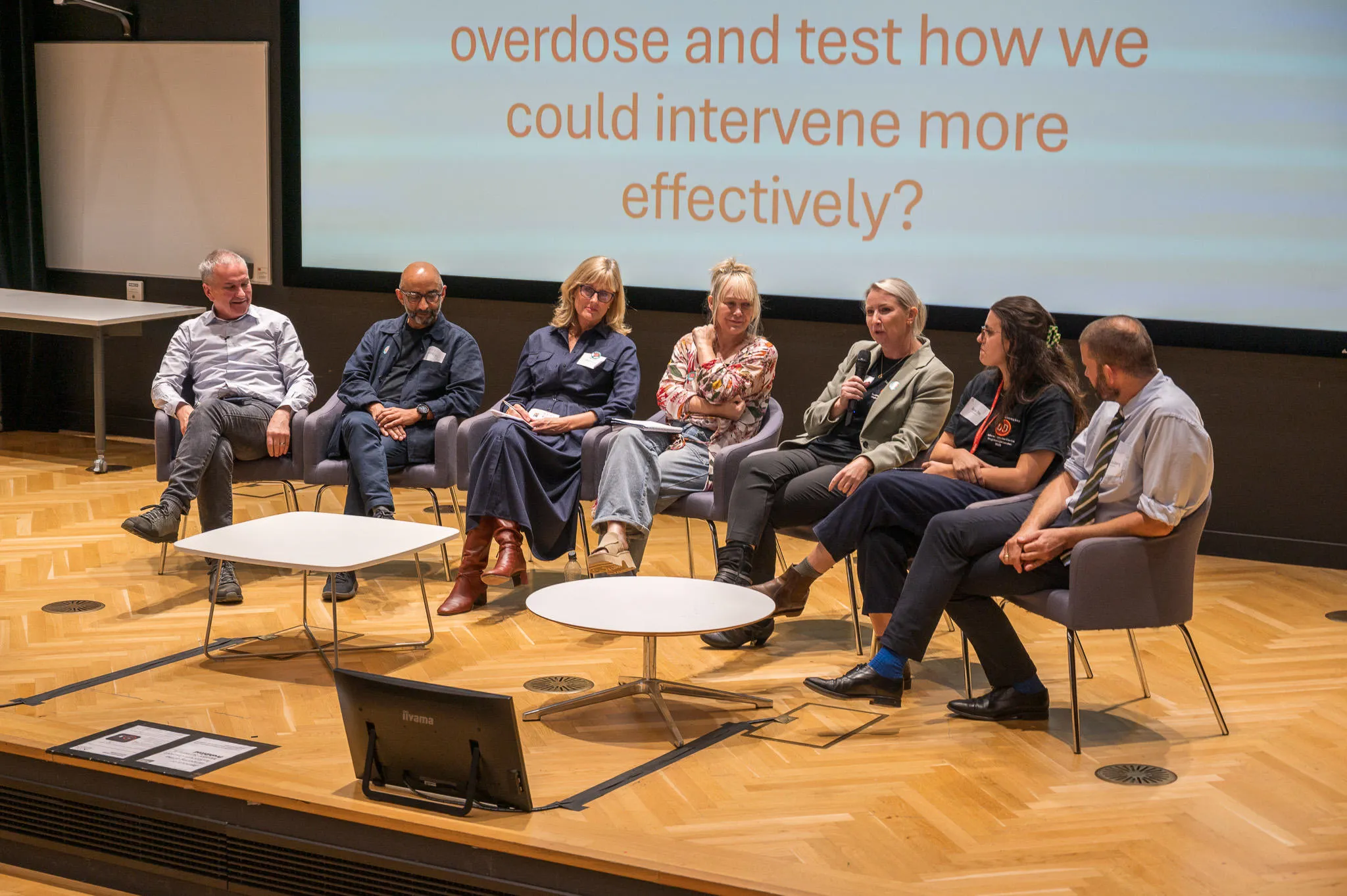
From new naloxone formulations to wearable tech to detect overdose, our conference highlighted both progress and ongoing challenges in preventing opioid overdose deaths. The speakers reinforced the urgent need for greater naloxone access and carriage, better first aid training, optimal dosing, and personalized interventions. It was a strong reminder of the amazing work that has been achieved in this field but also the work that still lies ahead. I hope attendees left inspired, motivated and ready to push forward research and action that saves lives.
Dr Nicola Metrebian, Reader in Addiction Treatment Research, Addictions Department, IoPPN
In this story

Reader in Addiction Treatment Research