“We are clearly witnessing the return of great power competition”
02 December 2025
King's Freeman Air and Space Institute host RAF Chief for lecture on future security challenges
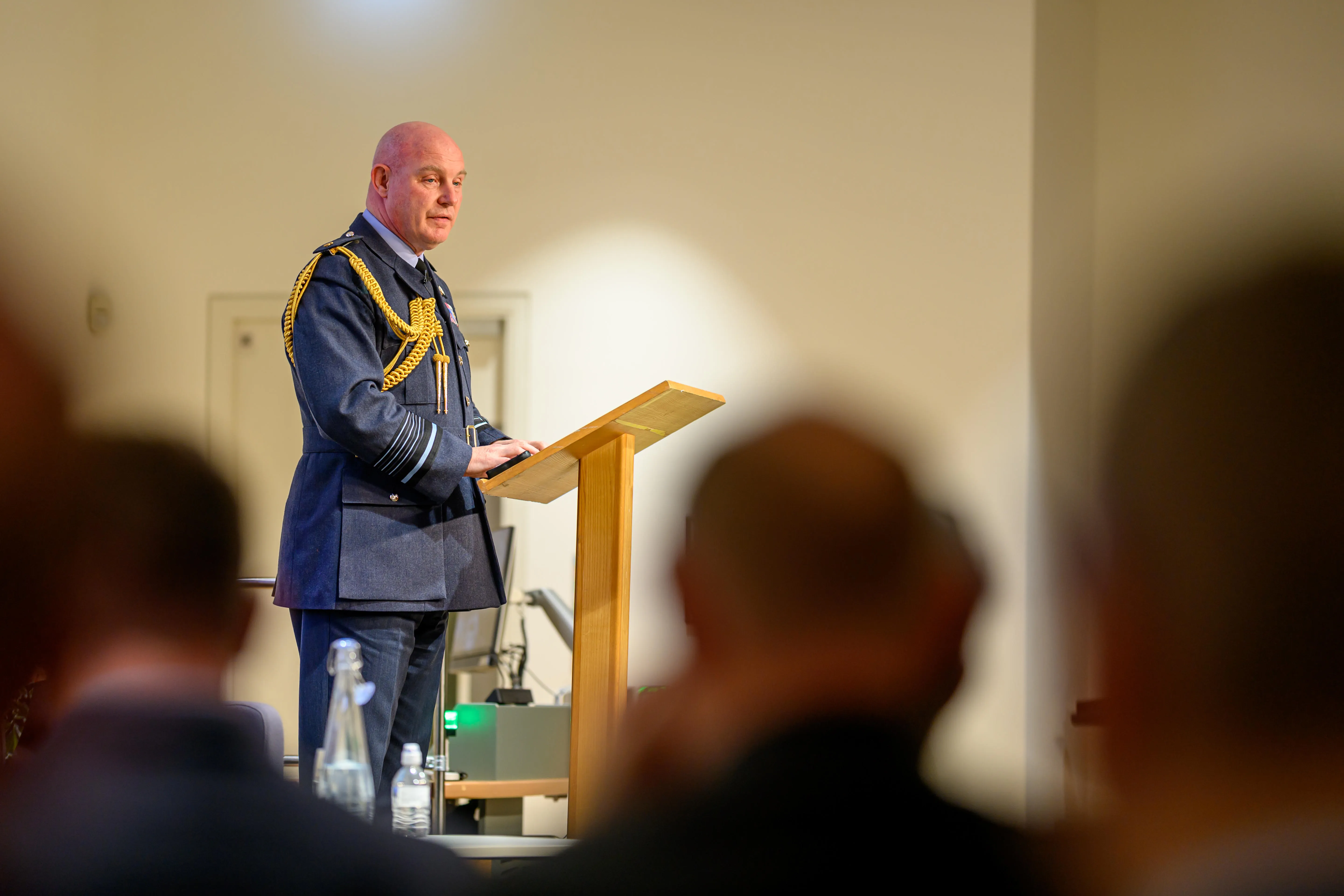
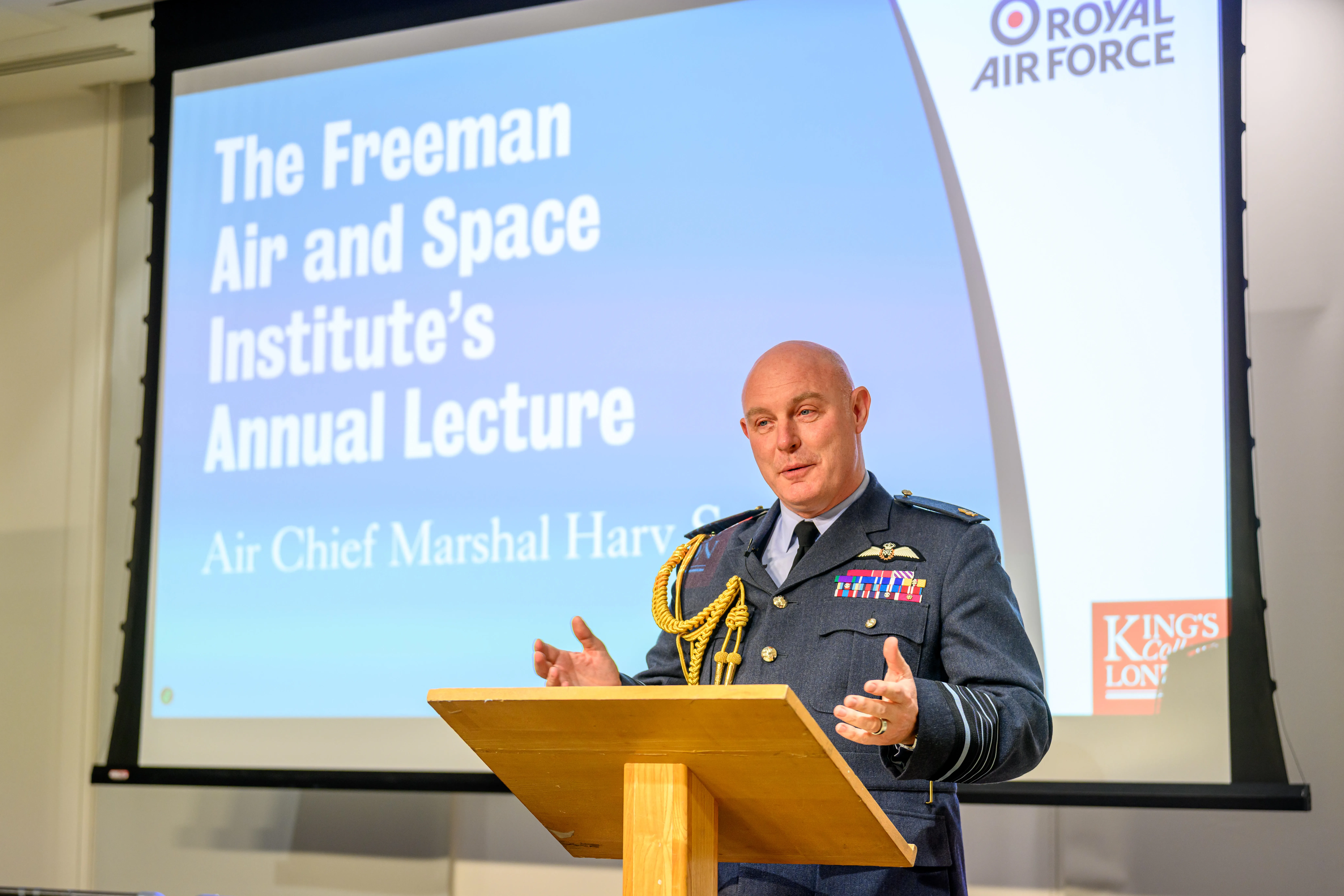
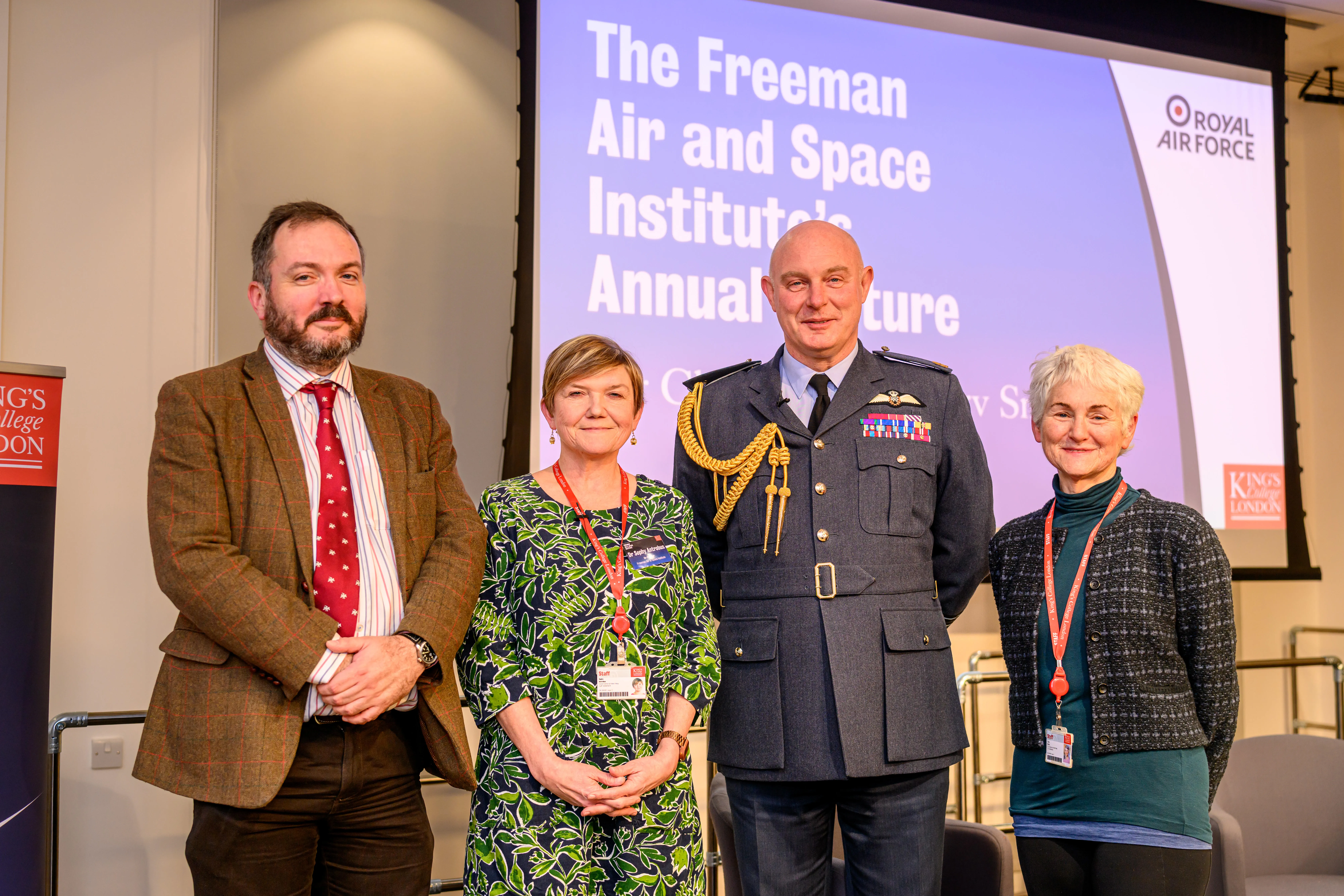
In an address at the Freeman Air and Space Institute’s fifth annual Chief of the Air Staff (CAS) Lecture, Air Chief Marshal Harv Smyth explored how the Royal Air Force is evolving to meet the demands of an increasingly unpredictable and contested world.

The pace of change and challenge
Air Chief Marshal Harv Smyth began the address with an overview of the RAF’s current operating environment. Echoing the sentiment of the Prime Minister at the Nato summit in June, Air Chief Marshal Harv Smyth commented on the ‘era of radical uncertainty’, in which the RAF’s operations and success continue to be a critical part of the nation’s infrastructure and the ability to develop and deliver air and space power.
Referring to the last few years of global instability, the Chief of the Air Staff explained: “When trouble arises, air power’s inherent attributes of height, speed, agility, and reach, mean that the RAF has secured a hard-won reputation of being our global first responder.”
Putting more AIR into the Air Force
Air Chief Marshal Smyth reflected on the RAF’s new focus on key areas to make the RAF more Agile, Integrated, and Ready.
He highlighted the contribution of global defence partners in academia and industry and explained that developing and delivering Air and Space power is a collective and collaborative endeavour, crucial to effective defence operations.
“Our defence partners are directly involved in making the United Kingdom safe and secure, maintaining our values and our way of life, bolstering the protection and assurance of our allies, and keeping our potential adversaries deterred.”
Inspiration from the Strategic Defence Review
Released in June this year, the Chief of the Air Staff acknowledged how the Strategic Defence Review reflects the changing geopolitical environment: “It provides a clear direction of travel for the RAF and ensures a good outcome for the service, the nation, our allies, and our partners.” And he acknowledged the ever-present challenge of the SDR in balancing the need to optimise for ‘the fight tonight versus modernising for the fight tomorrow.
For his tenure as CAS, Air Chief Marshal Smyth is taking clear direction from the Strategic Defence Review. He has identified four key pillars of activity designed to optimise and modernise the future of the RAF:
People – the needs for both recruitment and retention
Warfighting Ready – including the delivering the SDR and the Defence Investment plan,
Shifting to a NATO First focus
Gaining and maintaining control of the air via capability programmes.
Within those four-core pillars setting a solid foundation for the future, three notable project areas present renewed focus and opportunity for the Royal Air Force.
Nuclear
Air Chief Marshal Smyth explained how the Government’s recent decision for the RAF to once again return to sub-strategic nuclear, by procuring F35A and joining NATO’s Dual Capable Aircraft partnership, was very much welcomed. He acknowledged multiple challenges that need to be addressed in delivering this capability, but reinforced the message that “It’s an exciting prospect to make the RAF a nuclear force again and I wholeheartedly embrace the opportunity.”
Integrated Air & Missile Defence
Signalling the importance of a fully integrated air and missile defence (IAMD) to national security, the Chief of the Air Staff highlighted how “Any IAMD solution will be multi-domain and, importantly, more than just ground based air defence. Ultimately, it’s a multinational effort.”
He explained IAMD as a layered capability with the critical components of: command & control, sense and warn, missile defence systems, defensive combat air and – often overlooked – range of offensive capabilities.
Space
“We must increase our focus on space.”
Since his role as the inaugural director of space within defence, the Air Chief Marshal has since consistently worked to raise awareness and support for this critical domain and believes that: “Space matters now more than at any other time in our lifetimes.”
He explained how the domain is often subjected to an ‘out of sight, out of mind’ approach but emphasised how fast it become “an arena of strategic, economic, and political competition - vehemently contested, and increasingly congested.”
Although the SDR recognises that we need to build a modern, agile, resilient defence and civil space infrastructure, the chief contended that “we need a more ambitious approach to assuring access to space, and to protecting our equities within it, both on a sovereign basis, with Nato , and with other key allies.”
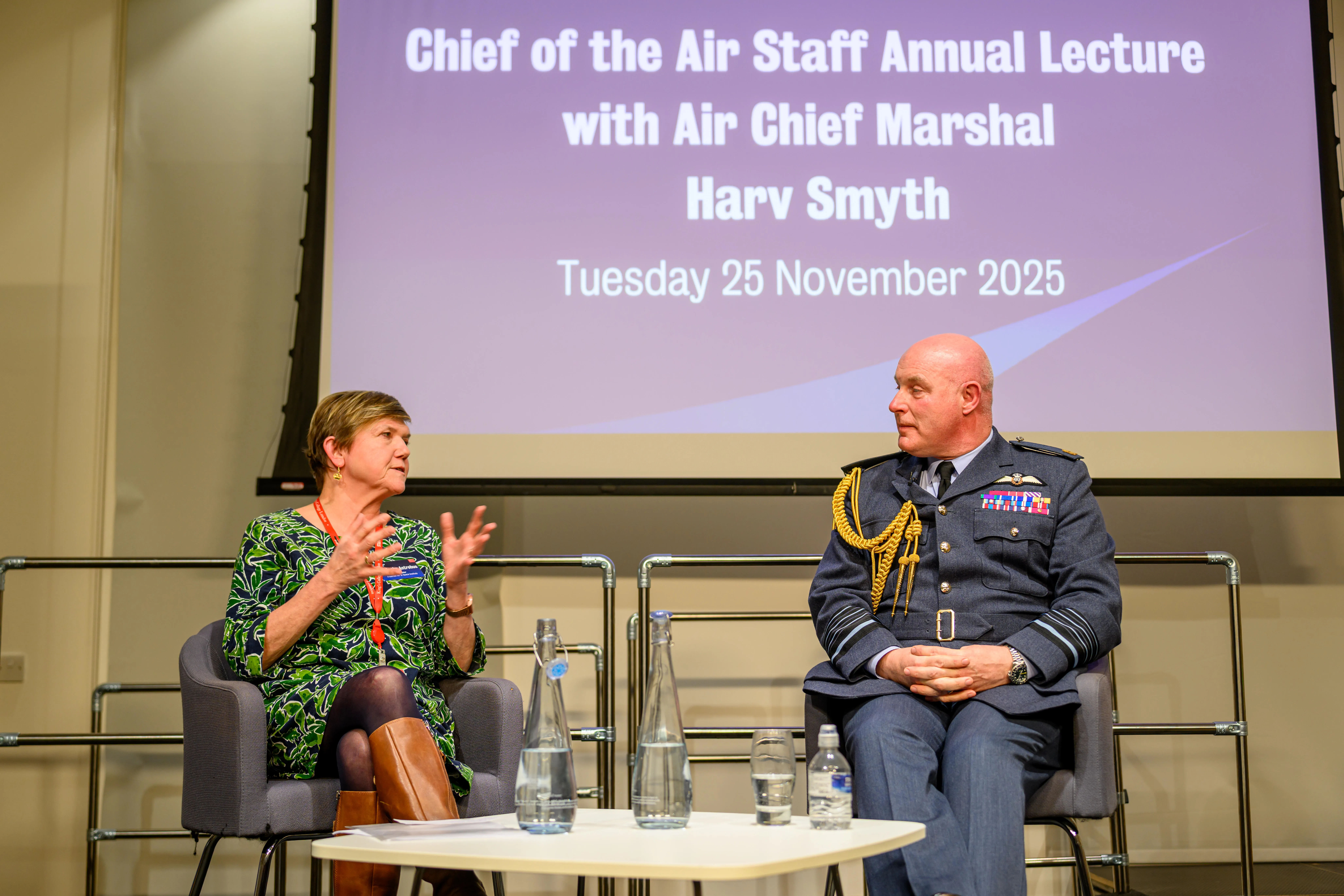
As a final nod to many members of the assembled audience in Bush House, he concluded by highlighting the importance of investing in the current and future leaders within in the force.
“I recognise and embrace this enduring challenge of finding, training, mentoring, and retaining the next generation of strategic air and space power thinkers and warfighters – those who will lead the Service in the years to come, to meet the new and varied challenges of tomorrow.”
The full discussion is available to watch here: https://youtu.be/nALIizTKDgM
To stay informed about the latest research, opportunities and events from FASI, subscribe to the mailing list or contact the team at FASI@kcl.ac.uk.
In this story

Head of the School of Security Studies

Co-Director of the Freeman Air and Space Institute

Co-Director of the Freeman Air and Space Institute