
04 March 2026
This month, King’s Clinical Academic Training Office (KCATO) is collaborating with the Faculty of Dentistry, Oral & Craniofacial Sciences to spotlight clinical academics working in the field of dentistry. In this edition, we hear from Dr Maisa Seppala, Senior Clinical Lecturer and Honorary Consultant in Orthodontics.

Adults typically have 32 teeth, but how is their number and form regulated, and why do some people end up with too many? Dr Maisa Seppala is studying the molecular pathways underpinning tooth development, and why this sometimes goes wrong.
Maisa qualified as a dentist in Finland before starting her research journey here at King’s. She completed her PhD with Professor Martyn Cobourne, now Academic Head of Orthodontics at King’s, after obtaining an EU Early-Stage Marie Curie Research Fellowship to fund her studies. At the time, Professor Cobourne was collaborating with a research laboratory in Baltimore, USA, who had generated mice lacking a gene called Growth Arrest-Specific 1 (Gas1). Maisa joined Professor Cobourne’s laboratory for her PhD project, which focused on exploring how the craniofacial development of Gas1 mutant mice differed from that of wild type mice. She found that loss of Gas1 resulted in microform holoprosencephaly (HPE), a condition that causes various facial midline defects(1). Significantly, the most severe form of HPE is characterised by a failure of the two brain hemispheres to separate, and it is the leading cause of early miscarriages.
The link between Gas1 and HPE was an important finding but, after specialising as an orthodontist, Maisa was intrigued by some other anomalies also seen in Gas1 mutants, which included formation of supernumerary teeth(2) and fused upper incisors(3). Due to the close relationship between dental number anomalies and misaligned bites, she decided to focus on these findings and other similar tooth defects. Maisa explained, “My recent studies have focused more specifically on genetic causes of dental anomalies and regulation of tooth number. For example, my PhD student Yiran Wang’s study examined how dysregulation of Sonic hedgehog (Shh) signalling results in disrupted tooth patterning and cell cycle regulation leading to fused molars.”
Today, Maisa continues to work on developmental mouse models, but her research is also driven by patients in her clinic who present with abnormalities in tooth number and eruption leading to need for orthodontic treatment. To investigate the underlying causes of these abnormalities, Maisa recruits patients who are interested in participating in research studies and collects samples for DNA sequencing to try and identify genetic variants that may be responsible for these dental anomalies. Current projects in the lab include work on aiming to identify causes of two different conditions; one called ‘primary failure of tooth eruption’, where teeth initially erupt but then become stuck to the surrounding bone, and another known as ‘odontoma’ that is a benign tumour of dental origin and can arise during tooth development, often also preventing the normal eruption of adjacent teeth. Maisa hopes that understanding the molecular mechanisms that cause the formation of these tumours could help healthcare professionals distinguish these benign odontomas from harmful tumours and help choose the best treatment approach where differential diagnosis is needed.
Maisa’s interest in research is a longstanding one. She originally considered studying biochemistry at university, but she felt that a career in healthcare was closer to her heart and wanted a profession with more security. “I’ve learnt that many people who have chosen healthcare or research as their profession have experienced something significant that made a long-lasting impact on us, inspired us to ask questions and made us passionate about merging these experiences to our area of interest in clinical practice or research,” Maisa said. “My little brother fell ill when I was 5 years old and, throughout his illness, my two elder sisters and I all helped to look after him. It made me question why he fell ill and not me. I obtained my answer from biology lessons during lectures on Mendelian inheritance, which I found fascinating.”
Another key moment came during dental school, when Maisa learnt about Finnish researcher’s Irma Thesleff’s pioneering work on the molecular basis of tooth development. “I remember whispering to my friend next to me that; this is exactly the kind of research I would like to do in the future. I realised it would allow me to combine my interest in genetics while at the same time having a career in dentistry”, Maisa said. “I did not know at the time that I’d be able to fulfil my ambition in a such a fantastic research environment as where I work now, in the Centre for Craniofacial and Regenerative Biology.”
Maisa told us that “training to become a clinical academic can be long, but full of valuable experiences and opportunities”. After her undergraduate studies and PhD, she became a Senior House Officer (SHO) at the maxillofacial surgery department in one of the London’s trauma centres. “I learned first-hand about the downsides of the London’s busy night life, including knife crime and street violence,” Maisa said. “Our common on-call duties consisted of suturing facial lacerations and diagnosing broken facial bones.”
Following SHO, Maisa successfully applied for an NIHR-funded Walport Academic Fellowship position at King’s that included orthodontic specialty training. “For my clinical part of the training, I rotated between St George’s and King’s College Hospital while continuing research at King’s,” Maisa explained. “I then began post-CCST (Certificate of Completion of Specialty Training) training, treating more complex patients and completing exams on hospital management and critical appraisal. I also became a Lecturer in Orthodontics at King’s and, as part of this new position, I needed to complete a Fellowship of the Higher Education Academy (FHEA) degree, learning more theory related to teaching.”
In her current position as Honorary Consultant (Guy’s and St Thomas’ Hospital) and Senior Clinical Lecturer in Orthodontics (King’s College London), Maisa divides her time between treating patients, teaching and supervising specialty trainees in the orthodontic clinic, pursuing her own research, supervising research students, and leading one of the modules that is part of the BSc in Dental Therapy and Hygiene programme. She has also served in various university roles as a member in the Curriculum & Assessment, the International, the Working Allocation Model (WAM) and the Athena Swan committees as well as acted as the Departmental Audit lead. As part of the research commitments, she has also had the opportunity to collaborate internationally and present at various conferences, which is something she particularly enjoys about her role.
“I must say, although my training has been long and at times challenging, and although I had to balance things with starting a family of three boys at the same time, it has given me a very versatile and rewarding role,” Maisa said. “Dentists pursuing their undergraduate degrees might not realise how many interesting opportunities for postgraduate training and research there exists, but I hope my story demonstrates some of the different paths one can choose to do as part of their dental career.”
References:
(1) Seppala M, Depew MJ, Martinelli DC, Fan CM, Sharpe PT, Cobourne MT. ”Gas1 is a modifier for holoprosencephaly and genetically interacts with Sonic hedgehog”. Journal of Clinical Investigation. (2007) Jun;117(6):1575-84. doi: 10.1172/JCI32032
(2) Seppala M, Thivichon-Prince B, Xavier GM, Shaffie N, Sangani I, Birjandi AA, Rooney J, Lau JNS, Dhaliwal R, Rossi O, Riaz MA, Stonehouse-Smith D, Wang Y, Papegeorgiou SN, Viriot L, Cobourne MT. “Gas1 regulates patterning of the murine and human dentitions through Shh”. Journal of Dental Research. (2022 Apr;101(4):473-482. doi: 10.1177/00220345211049403
(3) Seppala M, Xavier GM, Fan CM, Cobourne MT. “Boc modifies the spectrum of holoprosencephaly in the absence of Gas1 function” Biol Open. (2014) Jul 25;3(8):728-40. doi: 10.1242/bio.20147989
In this story
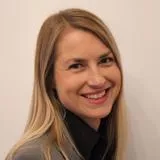
Senior Clinical Lecturer and Honorary Consultant in Orthodontics