
Biography
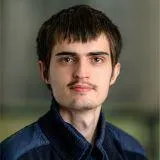
Dr. Damian Contant is a Research Associate in the Department of Physics at King’s College London since 2025, working under the supervision of Dr. Ivana Savić.
Dr. Contant obtained his PhD in Physics from Sorbonne University, Paris, France, in 2025, where he conducted his research at the Institute of Mineralogy, Physics of Materials, and Cosmochemistry (IMPMC) under the supervision of Dr. Maria Hellgren and Dr. Michele Casula. Prior to his doctoral studies, he earned a Master’s degree in Chemistry from École Normale Supérieure Paris-Saclay in 2022 and a Bachelor’s degree in Chemistry from Paris-Saclay University in 2019.
Over the years, Dr. Contant has developed a multidisciplinary academic background at the interface between chemistry and physics, with a strong emphasis on computational approaches applied to materials science.
Research
- Computational Physics
- Material Sciences
During his PhD, Dr. Contant investigated the electronic ground state of molecules and solids using advanced ab initio many-body methods within the framework of density functional theory (DFT), including approaches based on the random phase approximation (RPA). His work focused on computing properties such as total energy, atomic forces, relaxed geometries, and vibrational modes, while maintaining a delicate balance between accuracy and computational cost across different levels of theory.
At King’s College London, Dr. Contant is extending his research to include electron-phonon coupling calculations, contributing to the Leverhulme Trust project “Harnessing electron-phonon interactions in nanoplasmonic solar energy conversion.”
Publications
Self-consistent random phase approximation and optimized hybrid functionals for solids
Assessing many-body methods on the potential energy surface of the (H2)2 hydrogen dimer
Optimized effective potential forces with the plane-wave and pseudopotential method
Robust electronic phase transition against cation disorder in high-entropy pyrochlore iridates
Additional Information
Research
Theory & Simulation of Condensed Matter
Research is focused on the theory of condensed matter, and in particular the development and application of advanced theoretical and modelling techniques suitable for the study of complex materials and molecular systems and processes.
Research
Theory & Simulation of Condensed Matter
Research is focused on the theory of condensed matter, and in particular the development and application of advanced theoretical and modelling techniques suitable for the study of complex materials and molecular systems and processes.