

Dr Katie Manning
Lecturer in Climate Change, Business, and Society
Research interests
- Environment
- Geography
Contact details
Biography
Katie's work takes a systems approach to climate change, drawing on the political, economic and social dimensions of climate mitigation and adaptation.
She undertook her PhD at the University of Oxford, looking at the role of human adaptation to past climatic change in northern Africa. On completion of her PhD, Katie developed a range of analytical approaches to reconstructing palaeodemographic and dietary trends in the context of Holocene climatic and cultural change.
Recently, Katie's research focus has shifted to the challenge of contemporary and future climate change. In 2020, Katie joined the Department for Environment, Food and Rural Affairs, where she was leading on the systems analysis of land use for the upcoming government Land Use Framework.
Today, her work focuses on the food and land use systems, and the need for science, policy and business to work collectively to develop the systemic transformations that are required to build a sustainable future.
Research
- Land Use Change: Forestry, bioenergy, and regenerative farming
- Climate change adaptation and mitigation
- Science, policy, business interface
- Systems analysis for transformative and equitable change
- Palaeoclimatic and palaeodemographic change
Katie is a systems scientist who's research spans past, contemporary, and future climatic change. Her work addresses the complex inter-dependencies between the socio-economic, environmental and political dimensions of climate change, focusing on the need for collaboration across science, business and policy.
Teaching
Undergraduate
- 5SSG2062 Geography Research Tutorials
- 6SSG3083 Pathways to Impact: Geographical Research and Public Policy
Postgraduate
- 7QQMM900 The Challenges of Climate Change
- 7SSGN176 Fundamentals of Climate Change
Expertise and public engagement
Katie's public engagement extends well beyond academic publications to active participation in public events, media, and outreach that translate climate research into accessible insights and practical action. She recently co-edited the book The Purpose-Driven Organisation in Times of Climate Crisis—a collaboration bridging climate science and organisational leadership—which was featured at a book launch event hosted by King’s College London in December 2025, where she spoke alongside practitioners and academics about how organisations can embed purpose to respond more effectively to climate challenges.
She has also contributed to broader public understanding of climate issues through media engagement: she was involved in an interview for Living Planet on topics including the experiences of Dutch farmers in the context of environmental change, helping to highlight the human and ecological dimensions of climate impacts to a general audience.
Additionally, Dr Manning appeared as a guest on the podcast The Science Behind Climate Change where she discussed how systems approaches illuminate the connections between scientific evidence, socio-economic dynamics and organisational responses to climate change, making complex research relevant for listeners interested in science and societal solutions.
Further details
Research
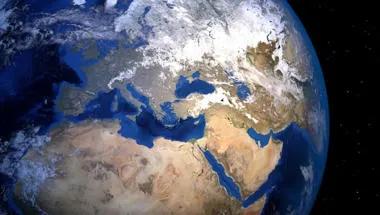
Physical Geography and Environmental Science research group
Enhancing understanding of processes, drivers and impacts in water, land, atmosphere and ecosystems to address environmental and societal challenges.
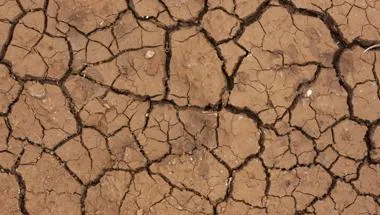
Risk, Climate & Society research group
Advancing understanding of risk and perception, as well as communication and regulation in a range of environmental, social and country contexts.

King's Climate Research Hub
Studying climate change through the relationship between science, policy and culture.

Palaeoenvironments Research Centre
Advancing our understanding of past climates, environments and populations through interdisciplinary research.
News
COMMENT: How would the Iran crisis play out in a world powered by renewables not fossil fuels?
If the Iran crisis unfolded in a world powered by renewables rather than fossil fuels, global energy systems would be far more resilient and far less...

New book sets out a practical roadmap for purpose-led organisations facing the climate crisis
The Purpose-Driven Organisation in Times of Climate Crisis brings together climate science and management research to help leaders embed purpose and...
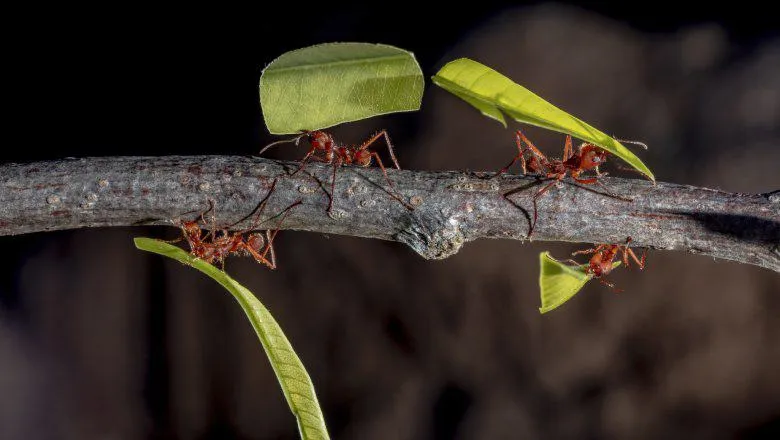
Humans delayed the onset of the Sahara desert by 500 years
Humans did not accelerate the decline of the ‘Green Sahara’ and may have managed to hold back the onset of the Sahara desert by around 500 years, according to...
Events

Book launch: The Purpose-Driven Organisation in Times of Climate Crisis
Join us for this exciting book launch, along with a discussion about organisational purpose with leading practitioners
Please note: this event has passed.
Land-Use, Farming and Net Zero
Join experts from research, policy and agriculture to discuss the implications of the UK Net Zero strategy for farming.
Please note: this event has passed.
Research
Physical Geography and Environmental Science research group
Enhancing understanding of processes, drivers and impacts in water, land, atmosphere and ecosystems to address environmental and societal challenges.
Risk, Climate & Society research group
Advancing understanding of risk and perception, as well as communication and regulation in a range of environmental, social and country contexts.
King's Climate Research Hub
Studying climate change through the relationship between science, policy and culture.
Palaeoenvironments Research Centre
Advancing our understanding of past climates, environments and populations through interdisciplinary research.
News
COMMENT: How would the Iran crisis play out in a world powered by renewables not fossil fuels?
If the Iran crisis unfolded in a world powered by renewables rather than fossil fuels, global energy systems would be far more resilient and far less...
New book sets out a practical roadmap for purpose-led organisations facing the climate crisis
The Purpose-Driven Organisation in Times of Climate Crisis brings together climate science and management research to help leaders embed purpose and...
Humans delayed the onset of the Sahara desert by 500 years
Humans did not accelerate the decline of the ‘Green Sahara’ and may have managed to hold back the onset of the Sahara desert by around 500 years, according to...
Events
Book launch: The Purpose-Driven Organisation in Times of Climate Crisis
Join us for this exciting book launch, along with a discussion about organisational purpose with leading practitioners
Please note: this event has passed.
Land-Use, Farming and Net Zero
Join experts from research, policy and agriculture to discuss the implications of the UK Net Zero strategy for farming.
Please note: this event has passed.