

Dr Saidul Islam
Senior Lecturer in Organic Chemistry
- Professional Placement Lead
- Organic Chemistry 2 Module Lead
Research interests
- Chemistry
Biography
Dr Saidul Islam is a Senior Lecturer in Organic Chemistry in the Department of Chemistry at King's College London. His research explores the chemical origins of life, investigating how nucleic acids, peptides, and organic cofactors could have formed on the early Earth.
He studied at the University of Manchester, receiving an MChem in Chemistry with Medicinal Chemistry alongside the Degussa, Roger Grice, R.F. Warren, and James K. Sutherland Prizes, the Mercer Scholarship, and a Zochonis Special Enterprise Award. This was followed by a PhD in Organic Chemistry, working on aspects of nucleic acid abiogenesis with Professor John D. Sutherland FRS.
Saidul undertook postdoctoral research at Queen Mary University of London (QMUL) in organometallic chemistry and catalysis with Dr Igor Larrosa, before moving to University College London (UCL) as a Research Fellow in prebiotic systems chemistry with Dr Matthew Powner.
He joined King's College London as a Lecturer in 2022 as part of the Department of Chemistry's expansion programme, and was promoted to Senior Lecturer in 2026. His research is supported by an EPSRC New Investigator Award and a Royal Society Research Grant.
In addition to his research, Saidul lectures on the Chemistry programme and King's Interdisciplinary Sciences Natural Sciences programme ('Organic Chemistry', 'Advanced Topics in Synthesis and Reactivity', and 'The Origins of Life from a Multidisciplinary Perspective'). He is a Fellow of the Higher Education Academy.
Research interests
- Prebiotic chemistry
- Organic chemistry
- Chemical origin of life
- Predisposed chemistry
- Green chemistry
- Catalysis
- Systems chemistry
Teaching
- Organic Chemistry 2
- Advanced Topics in Synthesis and Reactivity
- Natural Sciences The Origins of Life from a Multidisciplinary Perspective
- UG Research Methods Literature Review
- MSci Research Project & Dissertation
- MRes Research Methods in Experimental & Computational Chemistry
- MRes Research Project in Interdisciplinary Chemistry
Research profile
For more information on Dr Islam's research please see his Research Portal page
The Islam Group
Postgraduate Researchers
- Damon Hodder
- Jingyan Hou (Research Associate)
- Jasmine Reynolds (Postgraduate Researcher)
The Islam Group wants to unravel the chemical pathways that gave rise to the emergence of life on early Earth.
Their research broadly falls under the term ‘prebiotic chemistry’–chemistry before biochemistry. One view is that the chemistry on early Earth had to be different to existing biochemistry because metabolic reactions are (by and large) difficult or non-selective without enzyme catalysis. Enzymes are, however, products of billions of years of evolution and were likely absent at the origin of life. In the face of such a dichotomy, we are forced to ask difficult questions about our very own existence, such as:
- What sort of chemistries preceded life in the absence of enzyme catalysis?
- How did these chemistries evade the shackles of disastrously complex mixtures and indiscriminate reactivity that typically occurs when highly energetic molecules are combined together?
- Are there remnants of these chemical pathways persisting (in some form) in present biochemistry?
- Is life the way it is because the core structures of biology (DNA, RNA, proteins, cofactors) were omnipresent from the very moment organic chemistry was able to take place on the early Earth?
The Islam Group use chemistry (including synthetic organic chemistry) and various analytical techniques (such as NMR spectroscopy) to answer these questions.
Research
Microbes in Health & Disease
The Microbes in Health & Diseases Research Interest Group aims to foster collaboration across departments and faculties at KCL to explore the multifaceted role microbes play in health and disease.
News
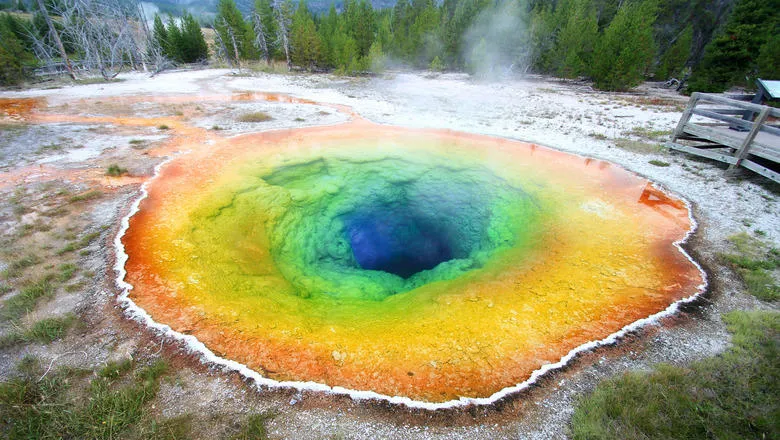
Simple cyanide chemistry could turn back clock on origins of life, scientists discover
Key compound necessary for all living things created in water using hydrogen cyanide, suggesting new parameters for beginning of complex life.
Features
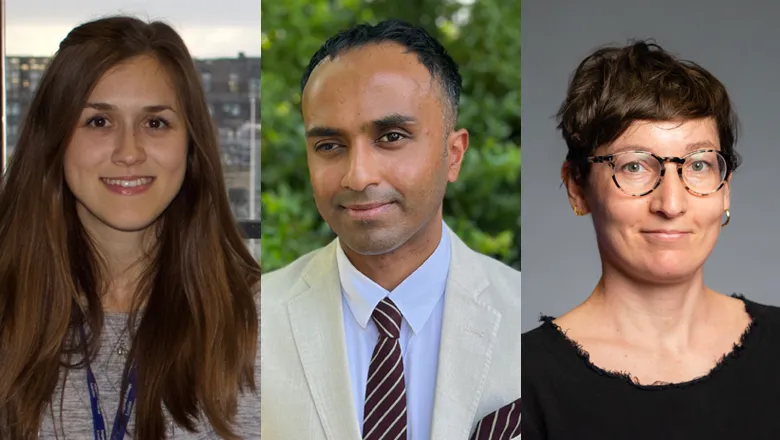
Meet our new researchers from the Department of Chemistry
We interview some of our researchers who started this academic year.
Research
Microbes in Health & Disease
The Microbes in Health & Diseases Research Interest Group aims to foster collaboration across departments and faculties at KCL to explore the multifaceted role microbes play in health and disease.
News
Simple cyanide chemistry could turn back clock on origins of life, scientists discover
Key compound necessary for all living things created in water using hydrogen cyanide, suggesting new parameters for beginning of complex life.
Features
Meet our new researchers from the Department of Chemistry
We interview some of our researchers who started this academic year.