

Samantha Day
PhD Student
Research interests
- Environment
- Geography
- Sociology
Contact details
Biography
Samantha worked in the charity sector for 20 years, in London, Dundee and Guyana. After completing a BA in Business Studies in the University of Greenwich, She went on to complete her MA in Climate Change: History, Society and Culture at King's.
Research
Thesis Title: 'Juggling in the Jungle: the recruitment of legitimacy in forest protection in Cambodia'
Samantha is interested in the political ecology of forest governance, and conservation practices in the Global South. She takes a poststructuralist approach to look at constructions of value in addressing societal and environmental problems, particularly their role in fixing uneven relationships of power.
Samantha's current research looks at how conceptualisations of civil society is employed in the recruitment of legitimacy for forest governance in Cambodia, and how the 'idea of an NGO' fixes uneven relationships of power.
PhD supervision
- Principal supervisor: Sarah Bracking
- Secondary supervisor: Kate Schreckenburg
Further details
Research

Geopolitics and Contested Development research group
Exploring geopolitics and contested development as locally contingent and globally interconnected processes shaped by the politics of colonialism.
Political Ecology, Biodiversity & Ecosystem Services
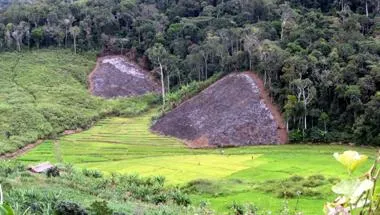
The Political Ecology, Biodiversity & Ecosystem Services (PEBES) group provides a collaborative focus for work on the social (re)production of nature, environmental conservation and resource management.
Research
Geopolitics and Contested Development research group
Exploring geopolitics and contested development as locally contingent and globally interconnected processes shaped by the politics of colonialism.
Political Ecology, Biodiversity & Ecosystem Services
The Political Ecology, Biodiversity & Ecosystem Services (PEBES) group provides a collaborative focus for work on the social (re)production of nature, environmental conservation and resource management.