

Biography
Sasha Ilyukevich is a PhD Researcher and Graduate Teaching Assistant in the Department of Geography at King’s College London. His research examines how culture and masculinities shape understandings and experiences of climate change, bringing together environmental humanities, critical geography and gender studies. He also specialises in the cultural geographies of the former Soviet Union. His doctoral project explores these relationships through Stihia, an electronic music, art and science festival in Uzbekistan’s Aralkum Desert.
Alongside his academic work, Sasha has professional experience in climate-risk analysis, sustainability research and environmental data science. He has held senior research and leadership roles, developing climate and sustainability datasets, analytical models and evidence to support decision-making across the private and public sectors.
He holds an MSc in Climate Change: Environment, Science and Policy from King’s College London, a Postgraduate Certificate in Applied Data Science from Birkbeck, University of London, and a Specialist Degree in Geography and Environmental Sciences from Belarusian State University, equivalent to a UK BSc (Hons) and MSc.
Research
Thesis Title: "Leave to Remain (in) the Andropocene: Climate Change and Spilled Masculinities through Cultural Lenses in Central AsiaCase Study: Stihia Music Festival, Aralkum Desert, Uzbekistan"
Sasha examines climate change through cultural and artistic interpretation, foregrounding masculinity as an underexplored analytic and focusing on Stihia, an electronic music, art and science festival in Uzbekistan’s Aralkum Desert. The thesis argues that climate change is not only a biophysical crisis but a culturally mediated struggle over meaning, legitimacy and imagination, shaped by gendered, racial, colonial and geopolitical power relations.
It develops the concept of spilled masculinity to show how masculine codes of mastery, control and extractivism extend beyond male bodies into institutions, political projects and aesthetic forms. Reframing the Anthropocene as the Andropocene, it understands planetary crisis through historically embedded systems of masculine authority rather than universalised “human” responsibility. Combining this with climate as a backgrounded condition, the thesis treats climate as a lived, phenomenological and symbolic order that structures how worlds are sensed and narrated.
Through ethnography, discourse analysis and interviews, the study examines how Stihia reproduces and unsettles andropocenic logics, offering a framework for analysing climate politics through culture, masculinity and space in Central Asia.
PhD Supervision
- Principal Supervisor: Professor Daanish Mustafa
- Secondary Supervisor: Johan Andersson
Research
Geopolitics and Contested Development research group
Exploring geopolitics and contested development as locally contingent and globally interconnected processes shaped by the politics of colonialism.
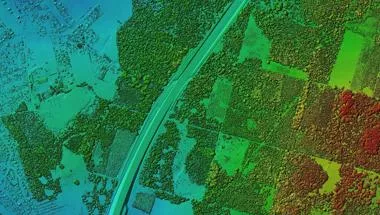
Geocomputation and Data Science Research Hub
The Geocomputation and Data Science Research Hub provides expertise in solving contemporary global problems using data.
Research
Geopolitics and Contested Development research group
Exploring geopolitics and contested development as locally contingent and globally interconnected processes shaped by the politics of colonialism.
Geocomputation and Data Science Research Hub
The Geocomputation and Data Science Research Hub provides expertise in solving contemporary global problems using data.