

Professor Steve Williams PhD
Professor of Neuroimaging
- Head of Department, Neuroimaging
Research interests
- Neuroscience
- Psychiatry, psychology and neuroscience
Contact details
Biography
Professor Steve C. R. Williams is Professor of Imaging Sciences at King’s College London and Head of the Department of Neuroimaging at the Institute of Psychiatry, Psychology & Neuroscience. He is also the founding Director of the Centre for Neuroimaging Sciences, a partnership between King’s College London and South London and Maudsley NHS Foundation Trust. His research focuses on developing and translating advanced brain-imaging technologies, particularly magnetic resonance imaging (MRI), into clinical and research tools for understanding neurological and psychiatric disorders.
Steve was the first PhD in Magnetic Resonance Imaging from the University of Cambridge and has been a leading figure in the development and application of functional and clinical neuroimaging. Over his career, he has collaborated with numerous academic and industry partners to pioneer imaging methods used to investigate brain structure and function in conditions such as depression, schizophrenia, autism, dementia and MND/ALS, publishing extensively in the field of neuroscience.
More recently, he has focused on making imaging quicker, quieter and more accessible serving as the Principal Investigator of the UNITY (Ultra-Low-Field Neuroimaging in the Young) programme, a global initiative funded by the Gates Foundation. The project involves the development of portable low-field MRI scanners and deployment across more than 40 countries, particularly in sub-Saharan Africa and South Asia. Initial studies have focused on early brain development in infants and young children and to expand access to neuroimaging in low-resource settings. Through UNITY and related collaborations, Steve has established an international network of imaging sites to better understand how environmental, nutritional and health factors influence early neurodevelopment and long-term brain health.
Please see his Research Staff Profile for more detail.
Key publications:
- Martins et al., 2026. Multimodal imaging suggests potential immune-vascular contributions to altered regional brain perfusion and oxygen metabolism in Post-COVID-19 Syndrome. Brain, Behavior, and Immunity.
- Ringshaw et al., 2026. Feasibility and Validity of Ultra-Low-Field MRI for Measurement of Regional Infant Brain Volumes in Structures Associated With Antenatal Maternal Anemia. Human Brain Mapping.
- Giacomel et al., 2026. Transcriptome-informed brain cartography of polygenic risk and association with brain structure in major psychiatric disorders. Molecular Psychiatry.
- Ljungberg et al., 2025. Characterization of Portable Ultra-Low Field MRI Scanners for Multi-Center Structural Neuroimaging. Human Brain Mapping.
- Abate et al., 2024. UNITY: A low-field magnetic resonance neuroimaging initiative to characterize neurodevelopment in low and middle-income settings. Developmental Cognitive Neuroscience.
Research
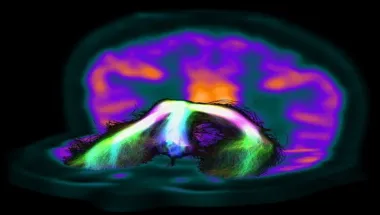
Wellcome EPSRC Centre for Medical Engineering
The Centre focuses on the science and engineering of medical imaging. The UK is strong in medical imaging, with the Centre hosting the largest research group in this area in Europe.The Centre combines fundamental research in engineering, physics, mathematics, computing, and chemistry with medicine and biomedical research. The 400 inter-disciplinary scientists in the Centre are transforming the diagnosis and treatment of patients, and will deliver exceptional research.

NIHR HealthTech Research Centre in Brain Health
National Institute for Health and Care Research (NIHR) HealthTech Research Centre, designed to accelerate the advancement of cutting-edge technology to better understand brain health and ageing and help people live healthier lives for longer.
News
Anaemia in pregnancy linked to differences in babies' brain development
Babies born to mothers who were anaemic during pregnancy have smaller brain volumes than babies born to mothers who were not, according to a new study by...

Brain histamine map connects genes to brain function and mental health
New research, from King’s College London and the University of Porto, has mapped the histamine system in the brain. Histamine, a molecule more commonly...

First in Europe: high-performance head-only scanner reveals ultra-fine brain detail
The Centre of Neuroimaging Sciences at the Denmark Hill Campus is now home to a new investigational GE HealthCare MAGNUS 3T MRI scanner, the first of its...

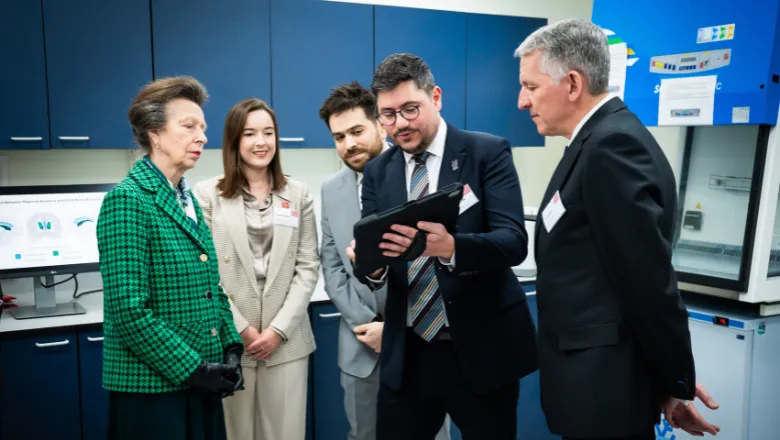
King's welcomes The Princess Royal to the Centre for Neuroimaging Sciences
The Princess Royal, in her role as Chancellor of the University of London, met with researchers, clinicians and collaborators of the UNITY Project to learn...
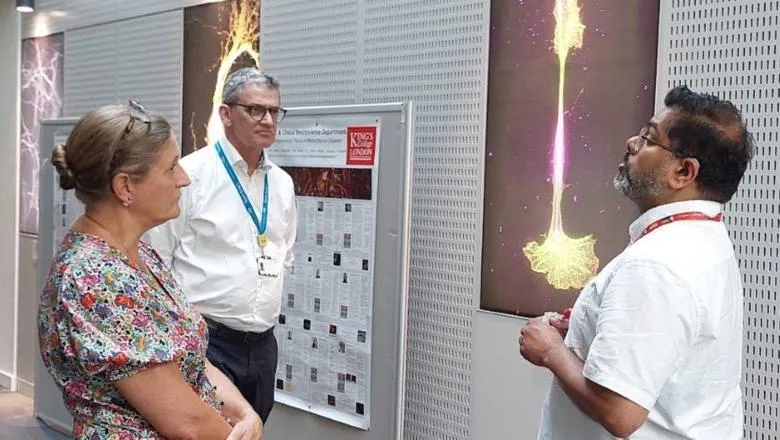
King's College Hospital Chief Officers Visit Maurice Wohl Clinical Neuroscience Institute
Professor Clive Kay and Dr Leonie Penna met with School of Neuroscience researchers to learn about clinical and academic partnerships.
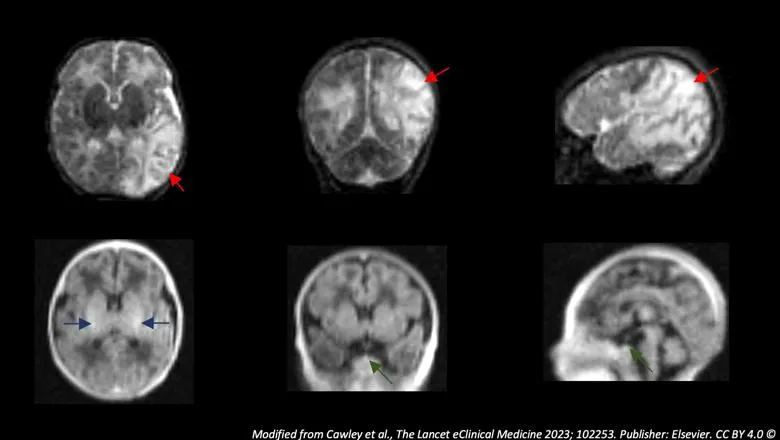
Major advance for detecting brain conditions in babies
Research by experts at King’s and Evelina London Children’s Hospital has found major advances for detecting brain conditions in babies using portable MRI...
Drumming for Health at the Royal Society Summer Science Exhibition 2023
The exhibition Drumming for Health and Wellbeing builds on two studies featuring King's researchers

Spotlight
The power to improve lives, anywhere: the impact of global research collaboration
Mental health. Gender equality. Fragile health systems. Conflict. When you think about the pressing issues our society faces, solutions might seem years away.

Research
Wellcome EPSRC Centre for Medical Engineering
The Centre focuses on the science and engineering of medical imaging. The UK is strong in medical imaging, with the Centre hosting the largest research group in this area in Europe.The Centre combines fundamental research in engineering, physics, mathematics, computing, and chemistry with medicine and biomedical research. The 400 inter-disciplinary scientists in the Centre are transforming the diagnosis and treatment of patients, and will deliver exceptional research.
NIHR HealthTech Research Centre in Brain Health
National Institute for Health and Care Research (NIHR) HealthTech Research Centre, designed to accelerate the advancement of cutting-edge technology to better understand brain health and ageing and help people live healthier lives for longer.
News
Anaemia in pregnancy linked to differences in babies' brain development
Babies born to mothers who were anaemic during pregnancy have smaller brain volumes than babies born to mothers who were not, according to a new study by...
Brain histamine map connects genes to brain function and mental health
New research, from King’s College London and the University of Porto, has mapped the histamine system in the brain. Histamine, a molecule more commonly...
First in Europe: high-performance head-only scanner reveals ultra-fine brain detail
The Centre of Neuroimaging Sciences at the Denmark Hill Campus is now home to a new investigational GE HealthCare MAGNUS 3T MRI scanner, the first of its...
King's welcomes The Princess Royal to the Centre for Neuroimaging Sciences
The Princess Royal, in her role as Chancellor of the University of London, met with researchers, clinicians and collaborators of the UNITY Project to learn...
King's College Hospital Chief Officers Visit Maurice Wohl Clinical Neuroscience Institute
Professor Clive Kay and Dr Leonie Penna met with School of Neuroscience researchers to learn about clinical and academic partnerships.
Major advance for detecting brain conditions in babies
Research by experts at King’s and Evelina London Children’s Hospital has found major advances for detecting brain conditions in babies using portable MRI...
Drumming for Health at the Royal Society Summer Science Exhibition 2023
The exhibition Drumming for Health and Wellbeing builds on two studies featuring King's researchers
Spotlight
The power to improve lives, anywhere: the impact of global research collaboration
Mental health. Gender equality. Fragile health systems. Conflict. When you think about the pressing issues our society faces, solutions might seem years away.