King’s College London researchers have launched a new toolkit to help public health teams tailor communication before, during and after communicable disease outbreaks.
The TAPIE Toolkit – standing for Trust, Accessibility, Partnership, Inclusivity and Empowerment – is now hosted on GOV.UK as part of the national Communicable Disease Outbreak Management Guidance, offering a practical framework for building trust and reducing health inequalities in diverse communities when rapid public messaging is essential.
Developed by Dr Julia Pearce (King’s College London), Professor Atiya Kamal (Birmingham City University) and partners at the UK Health Security Agency (UKHSA), the toolkit is grounded in several years of collaborative field research with communities and public health partners.
"The TAPIE toolkit provides something that is usable at speed during an outbreak," said Dr Pearce. "But it also supports teams to think about how they can embed these principles in practice before and afterwards – to ensure a more effective and speedy response in future outbreaks."
Tailoring messages to diverse communities
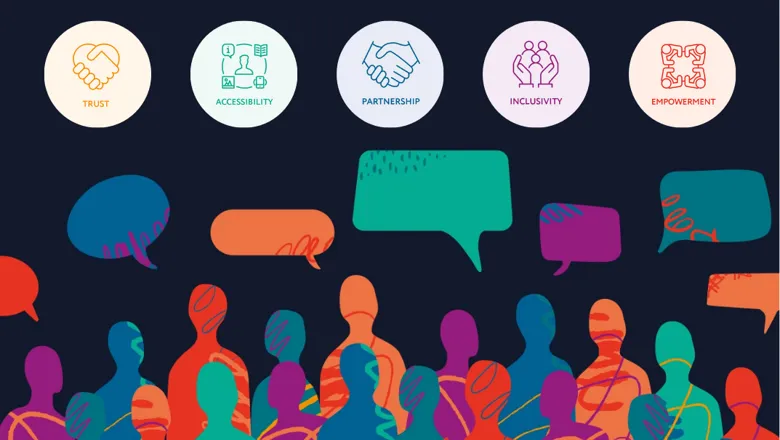
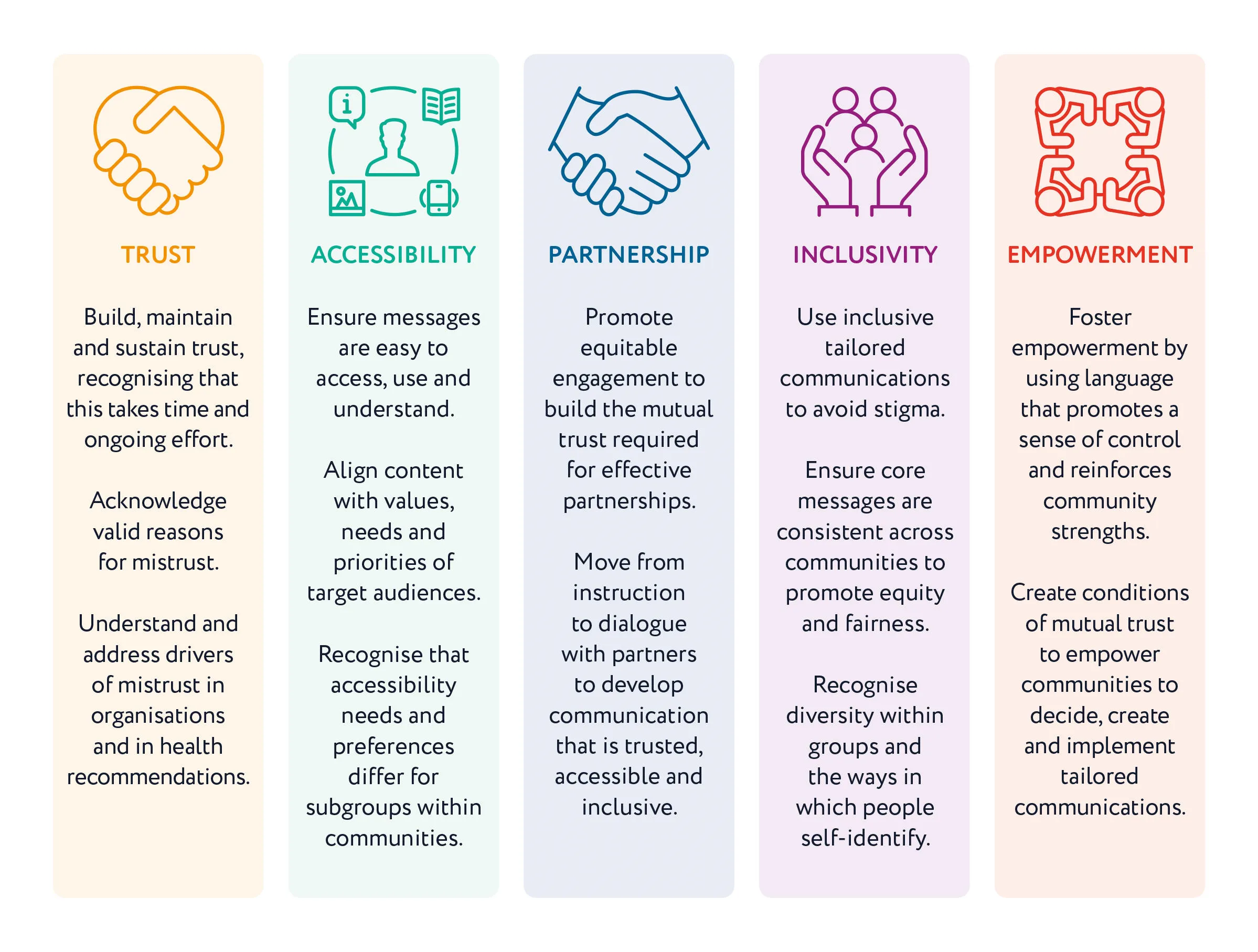
The Toolkit is built around five linked pillars: Trust, Accessibility, Partnership, Inclusivity and Empowerment. These principles work in tandem: trust depends on partnership and empowerment, while inclusivity is impossible without accessibility.
TAPIE’s development draws on an 18-month study during the COVID-19 pandemic on vaccine communication and uptake among four communities in Birmingham and London, funded by the ESRC as part of the UKRI rapid response to COVID. The research involved three rounds of data collection with more than 100 residents in four languages, alongside 17 community and public health organisations.
The findings highlighted the benefits of adopting a user-centric approach to tailoring messages which takes into consideration the needs, preferences and values of specific target audiences.
We found that campaigns that were co-developed with community partners were much more effective. For example, you need to know who your community’s ‘trusted communicators’ are – and they’re not always who institutions assume.
Dr Julia Pearce
Embedded in national guidance
The team then spent a further year developing and testing the toolkit with UKHSA, NHS and local authority teams, as part of the NIHR Health Protection Research Unit in Emergency Preparedness and Response at King’s. This piloting phase included surveys, focus groups and stakeholder workshops. This culminated in the toolkit’s inclusion in the GOV.UK Communicable Disease Outbreak Management Guidance.
It’s the only independent toolkit on that guidance page. I’m very proud that a product developed here at King’s, in partnership with communities and public health organisations, is now part of UK national guidance.
Dr Julia Pearce
While designed for outbreak moments, TAPIE stresses that trust, partnership and effective communication channels take time to build, and communities should not feel “picked up in a crisis and put down afterwards,” Pearce said. The toolkit therefore helps teams plan long-term engagement that strengthens readiness for whatever comes next.
The work also feeds directly into King’s teaching, including Pearce’s final-year BA module Disasters and Extreme Events, which explores public responses to crises and the real-world practice of emergency communication.
The TAPIE Toolkit is available now on GOV.UK, and the team is inviting feedback from practitioners in the field.