

Biography
Ben Harrop received his BSc in Biological Sciences from the University of Leeds in 2019 and following two years in biotechnology industrial research, he accepted a joint GSK and University of Manchester funded PhD project in the MacDonald and Travis labs in 2022. Ben's project investigated the metabolic requirements of lung tissue-adapted conventional and regulatory CD4+ T cells compared to those in the periphery, in the context of steady state using human lung biopsies, and during ongoing inflammation using murine models of fungal asthma.
In 2026, he submitted his thesis and joined the Neves Lab in the Centre for Host-Microbiome Interactions as a postdoctoral researcher, working on the PRIME project to further investigate the immunological mechanisms behind the development and maintenance of oral tolerance to peanut allergen in children.
Research
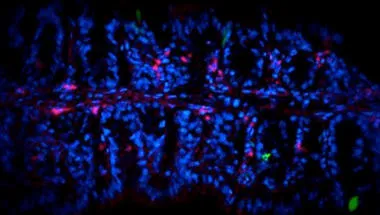
Neves Lab
The Neves lab aims understand how the different cellular compartments of the gut communicate with each other, to then be able to direct those conversations to promote gut homeostasis.
Centre for Host-Microbiome Interactions
Millions of microorganisms live in and on our bodies forming microbiomes on different surfaces. Researchers in the Centre for Host Microbiome Interactions study our relationship with these bacteria and fungi in health or in oral and systemic diseases such as periodontitis, candidiasis, oral cancer and Alzheimer’s disease.
Santos Group
The Santos lab led by Dr Alexandra Santos
Research
Neves Lab
The Neves lab aims understand how the different cellular compartments of the gut communicate with each other, to then be able to direct those conversations to promote gut homeostasis.
Centre for Host-Microbiome Interactions
Millions of microorganisms live in and on our bodies forming microbiomes on different surfaces. Researchers in the Centre for Host Microbiome Interactions study our relationship with these bacteria and fungi in health or in oral and systemic diseases such as periodontitis, candidiasis, oral cancer and Alzheimer’s disease.
Santos Group
The Santos lab led by Dr Alexandra Santos