

Dr Daniel Starza Smith
Reader in Early Modern English Literature
Research interests
- Literature
Pronouns
he/him
Biography
After several years working as a travel journalist for Time Out, I realised that my true calling lay in the manuscripts room of the British Library, where I became obsessed first with an anonymous Stuart play fragment, then the sprawling, messy Conway Papers archive, which contained poetry by John Donne. Before coming to King’s I taught at the University of Reading and UCL, before taking up a British Academy Post-Doctoral Fellowship at Lincoln College, Oxford, focusing on Donne’s women patrons. As a co-director of the Unlocking History research group until 2025 (with Jana Dambrogio), I helped developed the field of ‘letterlocking’, the study of epistolary security before the invention of the envelope. Our 2025 monograph Letterlocking was a book of the summer in the Wall Street Journal and a book of the year in the Times Literary Supplement; reviewers have called it ‘hugely important’, ‘truly monumental’, ‘field defining’, ‘astonishing’, ‘mesmerizing’, and ‘extraordinary’. I am General Editor of The Correspondence of John Donne for OUP, one of the longest-running endeavours in literary studies. In 2026-27 I will be undertaking a British Academy-funded project called John Donne in Venice in support of this research. I would be especially interested to work with students on aspects of Donne's writing, texts, biography, and intellectual world.
Research interests and PhD supervision
- John Donne’s life and works, particularly his patrons and friends, and the circulation of his writing in manuscript
- The literary and material features of early modern letters
- The history of manuscripts, printed books, libraries, and archives in early modern England and Europe
- Women’s writing and patronage activities
- Editorial theory and practice
Teaching
I contribute to the teaching of early modern literature across all undergraduate years, as well as on Master’s courses, where I also teach graduate research methods.
Expertise and public engagement
With the Unlocking History research group, I have led letterlocking workshops in archives and libraries, reaching conservation staff, scholars, and the general public; I have also consulted for The National Archives and British Library. My reviews of academic books and theatre performances have appeared in the Times Literary Supplement, Review of English Studies, John Donne Journal, Library and Information History, English Studies, and Shakespeare. The work of the letterlocking project has been covered by more than 300 media outlets around the world, click here to see more.
Selected publications
- Letterlocking: The Hidden History of the Letter, co-authored with Jana Dambrogio (MIT Press, 2025)
- Liber amicorum H. R. Woudhuysen, co-edited with Hazel Wilkinson (OUP, 2024)
- John Donne and the Conway Papers: Patronage and Manuscript Circulation in the Early Seventeenth Century (OUP, 2014)
- Manuscript Miscellanies in Early Modern England, co-edited with Joshua Eckhardt (Routledge, 2014)
- 'Unlocking history through automated virtual unfolding of sealed documents imaged by X-ray microtomography', Nature Communications
Research
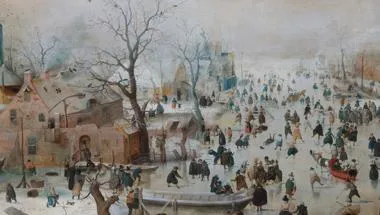
Centre for Early Modern Studies
The Centre for Early Modern Studies was established in 2015 to promote research in the early modern period (understood in its broadest sense, roughly 1400-1700).
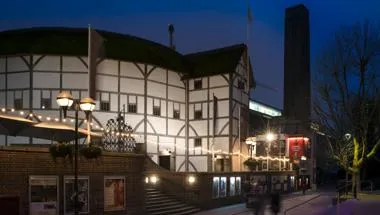
Shakespeare Centre London
Devoted to research, learning and teaching in Shakespeare and early modern literature and drama - in partnership with Shakespeare's Globe Theatre.

Letterlocking
This collaborative and interdisciplinary project based on the study of 250,000 archival documents sets out a complete theory for the study of letterlocking.
Project status: Ongoing

The Correspondence of John Donne
The Oxford Edition of the Correspondence of John Donne will collect, for the first time, all of the surviving correspondence of John Donne (1572-1631).
Project status: Ongoing
News
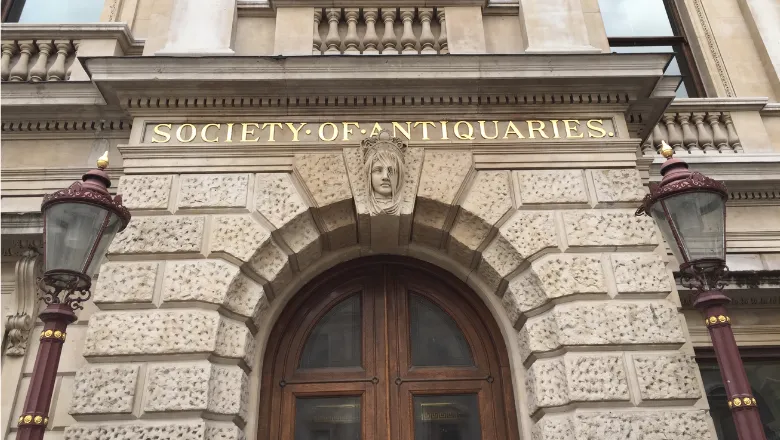
Academic elected to Society of Antiquaries
Dr Daniel Starza Smith, Senior Lecturer in Early Modern English Literature (1500-1700) in the Department of English, has been elected to the Society of...
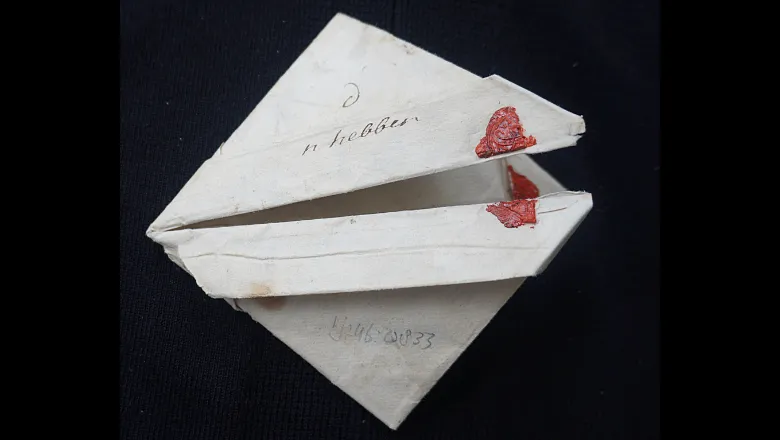
How letters were kept secure for centuries before the invention of the modern envelope
For hundreds of years, if you wanted to send letters anywhere in the world, you would have to turn your letter into its own envelope using a combination of...
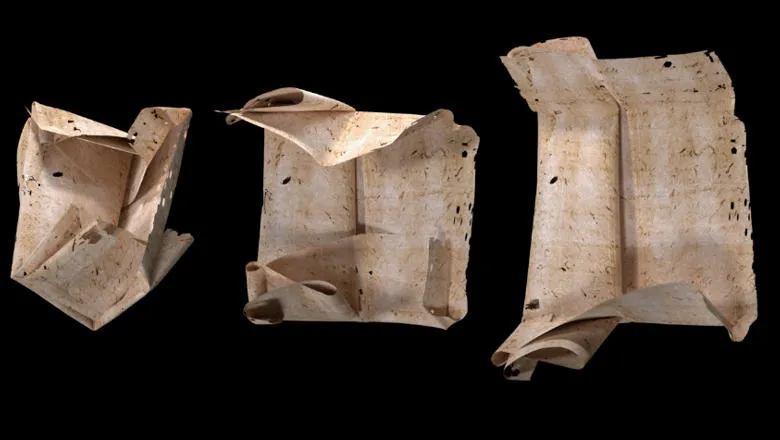
X-rays, algorithms, and “letterlocking” reveal the secrets of sealed historic letters
Preserving valuable evidence in 17th Century sealed letters through innovative computational techniques.
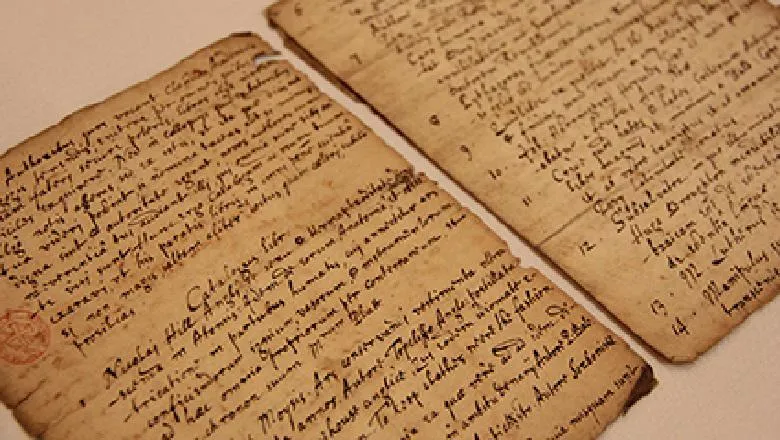
Analysing new John Donne manuscript
King’s academic analyses newly discovered John Donne manuscript
Research
Centre for Early Modern Studies
The Centre for Early Modern Studies was established in 2015 to promote research in the early modern period (understood in its broadest sense, roughly 1400-1700).
Shakespeare Centre London
Devoted to research, learning and teaching in Shakespeare and early modern literature and drama - in partnership with Shakespeare's Globe Theatre.
Letterlocking
This collaborative and interdisciplinary project based on the study of 250,000 archival documents sets out a complete theory for the study of letterlocking.
Project status: Ongoing
The Correspondence of John Donne
The Oxford Edition of the Correspondence of John Donne will collect, for the first time, all of the surviving correspondence of John Donne (1572-1631).
Project status: Ongoing
News
Academic elected to Society of Antiquaries
Dr Daniel Starza Smith, Senior Lecturer in Early Modern English Literature (1500-1700) in the Department of English, has been elected to the Society of...
How letters were kept secure for centuries before the invention of the modern envelope
For hundreds of years, if you wanted to send letters anywhere in the world, you would have to turn your letter into its own envelope using a combination of...
X-rays, algorithms, and “letterlocking” reveal the secrets of sealed historic letters
Preserving valuable evidence in 17th Century sealed letters through innovative computational techniques.
Analysing new John Donne manuscript
King’s academic analyses newly discovered John Donne manuscript