

Professor Jonathan Corcoran PhD
Professor of Neuroscience
Research interests
- Neuroscience
Contact details
Biography
Jonathan Corcoran is Professor of Neuroscience at the Institute of Psychiatry, Psychology & Neuroscience at King's College London.
He is interested in discovering drugs for treatment of central nervous system disorders, including Alzheimer’s disease, motoneuron disease, traumatic brain injury, spinal cord injury, and neuropathic pain.
Retinoic acid signalling is important for the maintenance and regeneration of the central nervous system. The receptors involved in this are retinoic acid receptors of which there are three types: alpha, beta and gamma.
His translational programs have run from bench to clinic. Work funded by the Wellcome Trust and MRC has allowed for King's develop a first in class orally available retinoic acid receptors beta drug (KCL 286) to treat central nervous system disorders, where axonal outgrowth, new nerve connections and reduction of inflammation are required.
This includes SCI, for which there are no treatments. They already have a multicentre phase IIA trial set up and funding is being sought from various streams.
Key publications
- Goncalves et al., 2019. Regulation of Myelination by Exosome Associated Retinoic Acid Release from NG2-Positive Cells. J Neurosci.
- Goncalves et al., 2019. Novel RARβ drug demonstrates efficacy in a pre-clinical neuropathic pain model restoring multiple pathways via DNA repair mechanisms. iScience.
- Trigo et al., 2019. The regulation of mitochondrial dynamics in neurite outgrowth by retinoic acid receptor beta signaling. FASEB J.
- Borthwick et al., 2020. Recent advances in the design of RAR α and RAR β agonists as orally bioavailable drugs. A review. Bioorg Med Chem.
- Goncalves et al., 2019. Discovery and lead optimisation of a potent, selective and orally bioavailable RARbeta agonist for the potential treatment of nerve injury. Bioorg Med Chem.
News
Human-safe drug repairs DNA in a mouse model of Alzheimer's
A drug, that has previously been shown to be safe and tolerated by humans, reduces multiple disease-linked features of Alzheimer’s in a mouse model of the...

Third annual Demystifying Impact event explores entrepreneurial mindset
Staff and students gathered to hear about innovative approaches to ensuring research findings have impact in the real world through creating start up and spin...

King's celebrates advances in innovation at the Spinout Accelerator Showcase
The King’s community gathered at Bush House to celebrate the conclusion of the inaugural cohort of the King’s Spinout Accelerator and their progress over the...
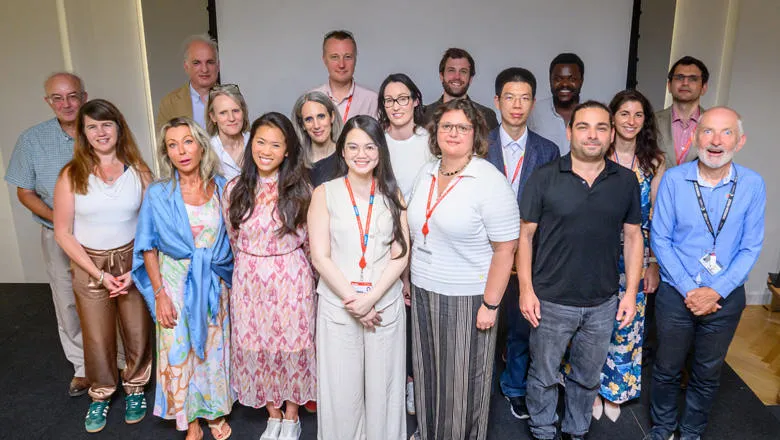
Meet the Spinouts on King's Spinout Accelerator
10 spinouts derived from King’s research community will explore the commercial potential of their research on the King’s Spinout Accelerator.
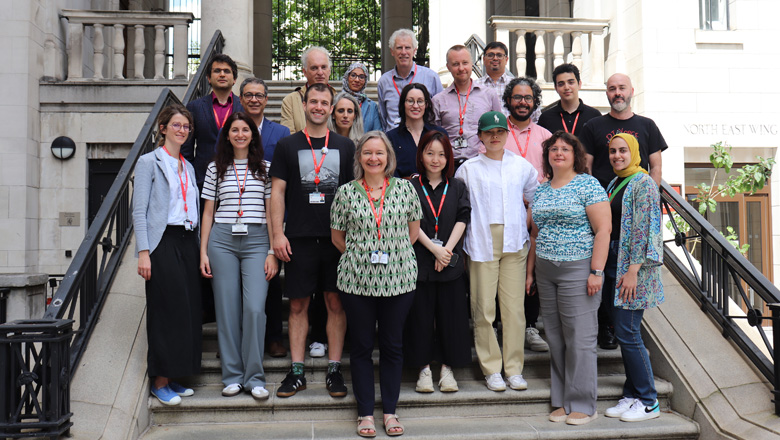
New orally available drug for spinal cord injury found to be safe and tolerable in healthy participants
New research from the Institute of Psychiatry, Psychology & Neuroscience (IoPPN) at King’s College London has demonstrated the safety and tolerability of a...

Features
A year in Alzheimer's Research at King's
Alzheimer’s disease is the most common form of dementia, affecting 1 in 14 people over the age of 65 in the UK, yet there is currently no cure. To mark World...

News
Human-safe drug repairs DNA in a mouse model of Alzheimer's
A drug, that has previously been shown to be safe and tolerated by humans, reduces multiple disease-linked features of Alzheimer’s in a mouse model of the...
Third annual Demystifying Impact event explores entrepreneurial mindset
Staff and students gathered to hear about innovative approaches to ensuring research findings have impact in the real world through creating start up and spin...
King's celebrates advances in innovation at the Spinout Accelerator Showcase
The King’s community gathered at Bush House to celebrate the conclusion of the inaugural cohort of the King’s Spinout Accelerator and their progress over the...
Meet the Spinouts on King's Spinout Accelerator
10 spinouts derived from King’s research community will explore the commercial potential of their research on the King’s Spinout Accelerator.
New orally available drug for spinal cord injury found to be safe and tolerable in healthy participants
New research from the Institute of Psychiatry, Psychology & Neuroscience (IoPPN) at King’s College London has demonstrated the safety and tolerability of a...
Features
A year in Alzheimer's Research at King's
Alzheimer’s disease is the most common form of dementia, affecting 1 in 14 people over the age of 65 in the UK, yet there is currently no cure. To mark World...