
Biography
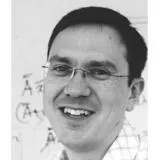
Paul is an optical physicist and data scientist who has worked for over 20 years in cancer research. Since gaining a PhD in Laser Physics from the University of Southampton, he has developed software for fluorescence microscope systems, in particular fluorescence lifetime microscopy, and associated image processing. He is the main author of TRI2, the fluorescence lifetime analysis program, and a key developer for the open source FLIMJ package for ImageJ. Now at KCL, he is applying multivariate survival analysis techniques to cancer patient risk prediction, diagnosis and treatment stratification. Combining data from different sources, such as immunology, genetics, medical imaging and microscopy, to produce signatures that are predictive a biological or patient response.
Research
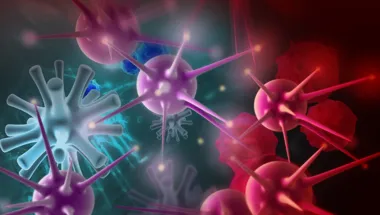
Tony Ng Lab: Cancer Biology and Imaging
Our laboratory has adopted a multidisciplinary approach to devise a biomarker and model-driven treatment stratification approaches, by bridging the gap between Physics, Biology and Medicine, particularly in the field of translational cancer research.
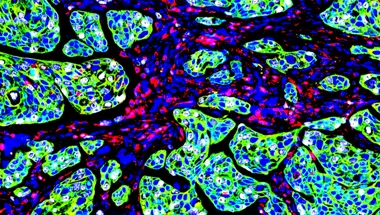
Spatial Biology Network
The Spatial Biology Network is a cross-faculty research interest group that brings together researchers from various disciplines, ranging from technology development and molecular biology, to bioinformatics and clinical translational research, to explore the complexity of spatial biology.
Research
Tony Ng Lab: Cancer Biology and Imaging
Our laboratory has adopted a multidisciplinary approach to devise a biomarker and model-driven treatment stratification approaches, by bridging the gap between Physics, Biology and Medicine, particularly in the field of translational cancer research.
Spatial Biology Network
The Spatial Biology Network is a cross-faculty research interest group that brings together researchers from various disciplines, ranging from technology development and molecular biology, to bioinformatics and clinical translational research, to explore the complexity of spatial biology.