

Colonel Simon Horne OBE PhD
Visiting Senior Research Fellow
Pronouns
he/him
Biography
Si Horne is an Army Emergency Medicine (EM) specialist from Plymouth. He has supported operations in Northern Ireland, Iraq, Afghanistan, Sierra Leone and South Sudan, at every stage from tactical evacuation to large field hospitals. His leadership positions have included: serving as EM lead for the Army (he is currently Consultant Advisor for Paediatrics); heading up the Centre for Defence Engagement (designing and delivering partner nation capacity building programmes worldwide); and supporting the strategic development of health services in the Southwest as Deputy Medical Director for University Hospitals Plymouth NHS Trust.
He has a PhD in Global Health, which focussed on medical civil-military interactions. In 2024 he was the Chief of the General Staff’s Fellow to the Royal United Services Institute, where he concentrated on maximising the survivability of combat service support. Although his work is mostly clinical now, he continues to lead Defence research into mass casualty management, as well as working on national resilience planning, international competition and influence.
Research
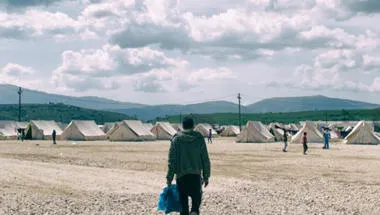
Centre for Conflict & Health Research
Cross disciplinary initiative studying the intersection of global health, security, and political governance in conflict-affected fragile states and regions.

Centre for Conflict & Health Security
The Centre for Conflict & Health Security is a new cross-faculty centre of excellence to understand the relationships between conflict and security (covering human, national and international perspectives) as a key determinant of health, especially in fragile and conflict affected States.
Research
Centre for Conflict & Health Research
Cross disciplinary initiative studying the intersection of global health, security, and political governance in conflict-affected fragile states and regions.
Centre for Conflict & Health Security
The Centre for Conflict & Health Security is a new cross-faculty centre of excellence to understand the relationships between conflict and security (covering human, national and international perspectives) as a key determinant of health, especially in fragile and conflict affected States.