
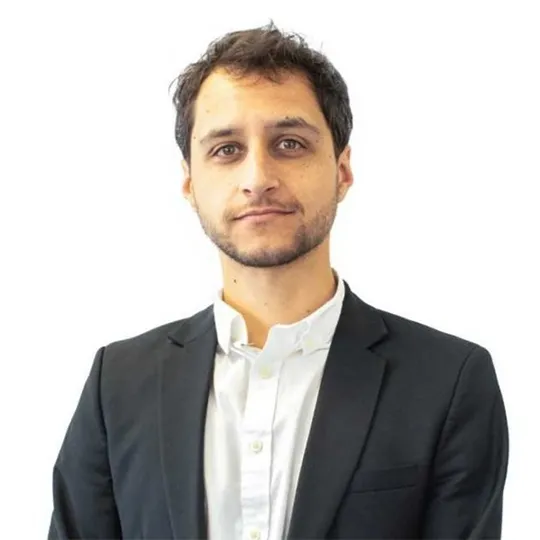
Dr Thomas Hinkel
Visiting Research Fellow
Research interests
- Conflict
- Security
- Peace, justice & strong institutions (SDG 16)
Biography
Thomas Hinkel is a Visiting Research Fellow in the Department of War Studies at King’s College London. He is a political scientist whose research sits at the intersection of international relations, political economy, and economic sociology, with a particular focus on conflict, governance, and informality in Africa and the broader Global South. His work examines how shifts in economic systems, including illicit trade, smuggling, and informal markets, reshape political authority, social order, and patterns of governance by non-state actors.
Much of Thomas’s research draws on empirical work in the Central Sahel, particularly Mali, where he examines the interaction between economic networks, traditional authority, and armed actors. In parallel, his work contributes to scholarship on religion and peacebuilding by analysing how religious ideas, institutions, and leadership structures mediate authority, legitimacy, and social cohesion in contexts of conflict and post-conflict transition.
Alongside his research, Thomas has extensive experience teaching and supervising undergraduate and postgraduate students in international relations and conflict and security studies.
Research Interests
- Conflict and political order in Africa
- Informal and illicit economies
- Governance by non-state actors
- Political economy of conflict and violence
- Global economic transformations and resource competition in international politics
- Religion and peacebuilding
Thomas Hinkel’s research examines how economic systems shape political authority, governance, and conflict in fragile and conflict-affected settings. His work focuses on the role of informal and illicit economies, including smuggling and non-state trade networks, in producing new forms of political order and governance beyond the formal state. Empirically, his research is grounded in the Central Sahel, particularly Mali, where he studies the interaction between economic networks, traditional authorities, armed actors, and religious institutions. In parallel, his work contributes to debates on religion and peacebuilding by analysing how religious ideas, institutions, and leadership structures mediate legitimacy, social cohesion, and conflict dynamics. Across these areas, his research seeks to link political economy approaches to broader questions of governance, authority, and social order in contemporary international politics.
Publications
- Hinkel, T. & Fouraba Traore, B. (2020). “Mali’s peace networks: the role of Islamic religious leaders in conflict resolution.” Conflict,Security & Development, 20 (3), 401-418. DOI: https://doi.org/10.1080/14678802.2020.1775999
- Hinkel, T. (2019). “Book review: Extralegal Groups in Post-Conflict Liberia.” Contemporary Voices: The St Andrews Journal ofInternational Relations, 1 (3), 110-113. DOI: http://doi.org/10.15664/jtr.1523
PURE Profile
Research
Centre for the Study of Divided Societies
The Centre for the study of Divided Societies provides a global focal point for teaching and research on ethno-national problems that divide and unite societies across the modern world.
Research Centre in International Relations (RCIR)
The Research Centre in International Relations conducts research on practices of security and conflict, their transformation, and their social and political implications.
Events
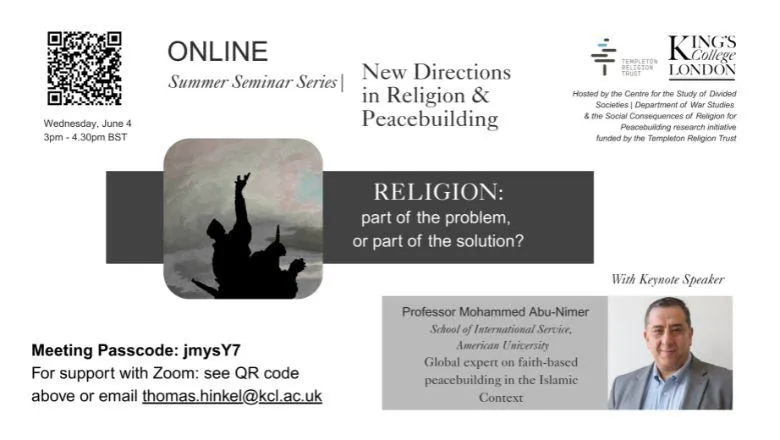
Religion: part of the problem, or part of the solution?
Professor Mohammed Abu-Nimer delivers the keynote speech at this seminar on the role of religion in peacebuilding.
Please note: this event has passed.
Research
Centre for the Study of Divided Societies
The Centre for the study of Divided Societies provides a global focal point for teaching and research on ethno-national problems that divide and unite societies across the modern world.
Research Centre in International Relations (RCIR)
The Research Centre in International Relations conducts research on practices of security and conflict, their transformation, and their social and political implications.
Events
Religion: part of the problem, or part of the solution?
Professor Mohammed Abu-Nimer delivers the keynote speech at this seminar on the role of religion in peacebuilding.
Please note: this event has passed.