
Social mobility at King’s
Empowering underrepresented students in higher education
The opportunity to access a great education is not distributed fairly. We’re changing that. This page shares the data and evidence behind the work we’re doing to change educational outcomes. You’ll find programme-based information, as well as the impact of our What Works team.
We support students from underrepresented backgrounds from Year 6 onwards through a series of targeted programmes. These include Step Up Scholars, which eases the transition to secondary school; King’s Scholars, which builds academic confidence, boosts attainment and university awareness in Years 7-9; and Scholars+, which provides tutoring and attainment support in Years 10-11. Alongside this, Parent Power empowers families to advocate for education in their communities and engage in their children’s education, and regional outreach in Hastings and Kent extends this support beyond London.
King’s College London’s post-16 widening participation work supports students from underrepresented backgrounds through tailored programmes that prepare them for university and beyond.
The flagship K+ programme offers a two-year journey of academic enrichment, mentoring, and application support for Year 12 and 13 students, with progression incentives including reduced offers and bursaries.
The team also works intensively with Priority Groups, including care-experienced, estranged, forced migrants, young carers, and Gypsy, Roma and Traveller students, offering bespoke guidance, transition events, and community networks.
For aspiring healthcare professionals, the Medicine & Dentistry Lecture Series provides weekly online sessions led by clinicians and admissions experts, helping students in Years 11-13 understand the realities of medical careers and strengthen their university applications.
We work across diverse research methods, building on existing evidence while exploring new insights to ensure we focus on what matters most.
We leverage expertise from across the university and the sector to ensure our research is both rigorous and practical.
Partnering for Practical Change: We work with different practitioner teams (Social Mobility & Widening Participation, Student Transitions & Outcomes, Careers & Employability, Global Mobility) to ensure our evidence is immediately applicable, turning research into real-world improvements for students.
In 2024/25 we’ve worked on 20 core project that cut across our thematic areas- including evaluations of our flagship programmes like K+ and King’s Scholars.
Our commitment to generating causal evidence (type 3) means that we are also working on a number of randomised controlled trials – the anticipated timelines for us publishing these are:
| 2026 | K+ internal RCT |
| MDLS: RCT results | |
| KS RCT interim results | |
| 2027 | MDLS: Impact evaluation published once students enter into HE |
| 2028 | KS RCT final results |
| Contextualised admissions (interim) - summer 2028 |
The five key themes of the What Works subject areas: Fair Access, Transition, Outcomes, Mental Health & Wellbeing and Decision-Making.
The ‘What We Know So Far’ documents bring together findings from our various reports that we believe will be useful for a wide audience of practitioners (as well as any incoming staff). They represent our baseline knowledge - a foundation that will grow as we carry out more projects. These documents consolidate and expand our collective knowledge base, presenting key findings in an accessible, practitioner-focused format that complements rather than duplicates traditional reports. By using plain language and linking our work to the sector’s wider evidence base, they make our insights more visible, more usable, and more impactful.
Our strategy to boost Kings’ knowledge of our students and improve the student experience.
The four benefits of using behavioural insights in our research and evaluation.
Student Decision-Making: Resources
See the outcome of all the What Works key themes, behavioural insights and strategy:
5. UCAT analysis - The University Clinical Aptitude Test (UCAT) is an externally-administered exam which individuals complete as part of their application to Medical School. This project examined patterns in UCAT scores between the entry years of 2018/9 and 2023/4 for applicants to King’s College London to understand if there was a statistically significant relationship between UCAT performance and performance on medical degree programmes. Please read the final report.
6. Online lecture series RCT - The University Clinical Aptitude Test (UCAT) is an externally-administered exam which individuals complete as part of their application to Medical School. This project examined patterns in UCAT scores between the entry years of 2018/9 and 2023/4 for applicants to King’s College London to understand if there was a statistically significant relationship between UCAT performance and performance on medical degree programmes. A final report with final outcome measures is expected in 2027. Please read the interim a. report, b. Protocol, c. Poster (p.2).
7. K+ evaluating attainment raising activities - This evaluation looked at the 'attainment raising component' of the K+ students and aimed to understand the extent with which being on the bootcamp sessions improved outcomes along the academic behavioural confidence scales. The scales looked at self-efficacy, sense of belonging and metacognition. You can read the report here.
8. K+ mode of delivery - In 2024/25, we continued our evaluation of K+ to understand whether changes to the delivery of the programme had an impact on widening participation student participation. Please read the final report.
9. 'The Success for Black Students; programme - The Success for Black Students programme supports aspiring Black engineers and physicists at both school and university through outreach activities and targeted support for Black undergraduate engineering and physics students. It engages Black school pupils in Years 9 to 12, and, within the university, offers a mix of mentoring, summer research placements, and social events. Qualitative research was undertaken with Black undergraduate students to understand if, and how, the programme had a positive impact on the Black student experience. Please read the final report here.
10. Understanding the experiences of 'commuter students' - This mixed-methods research into the lives of commuter students aimed to understand how those who travelled to the university campus and/or lived with family members had a distinct set of challenges, perspectives, and ways of engaging with university life. Surveys and focus groups were used to better understand how these experiences tied into notions of belonging as well as mental health and wellbeing outcomes. Please read the final report here.
11. Non-continuation and student transition at King's - We provided an up-to-date account of student continuation and transition across the college from 2018/18 to 2022/23; looking at which student cohorts were more susceptible to non-continuation, the importance of WP status, faculty and fee status and finally, the relationship between students' sense of belonging and non-continuation. Please read the final report.
12. Priority group students - this research explores the experiences of Priority Group undergraduate students at King’s – those who are care-experienced, estranged, or hold forced-migrant status. Sixteen in-depth interviews were conducted in 2024/25 to understand their perspectives on housing, services, finances, and belonging. Please read the final report.
Empowering underrepresented students in higher education
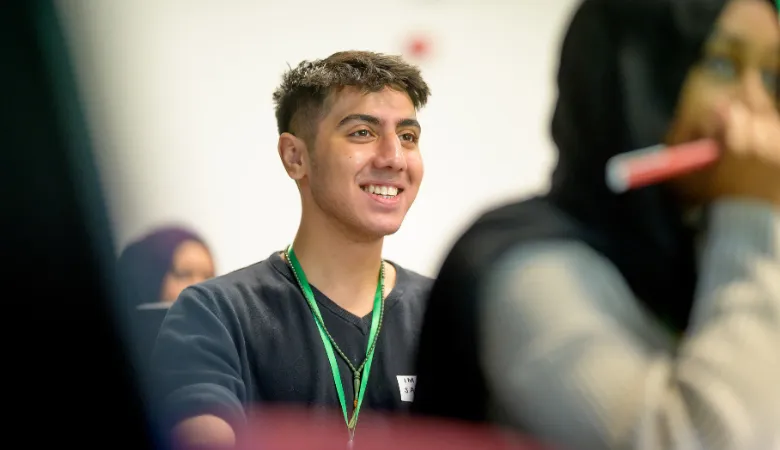
Who our Social Mobility & Widening Participation teams work with.

Find out more about our teams and how to contact us.