
BiP Pakistan 2026

Climate Behavioural Lab, Ghazi University, DG Khan
Overview
BiP Pakistan 2026 brings together researchers, policymakers, and practitioners working at the intersection of behavioural science and public policy in Pakistan. The workshop aims to advance the use of behavioural insights in government systems, while fostering collaboration between academia and public institutions.
Pakistan faces a range of complex policy challenges—from climate vulnerability and public health to energy use and governance—that are deeply shaped by human behaviour and social norms. Traditional policy tools often fall short because they fail to account for how people make decisions in real-world contexts. Behavioural Insights (BI) offer an evidence-based approach to designing more effective policies by aligning interventions with human behaviour. While countries such as the UK, the US, and Singapore have successfully embedded BI into policymaking, its application in Pakistan remains limited and fragmented, with no coordinated platform to connect research, policy, and practice.
BiP Pakistan aims to address this gap by building capacity, fostering collaboration, and promoting the use of behavioural approaches in policymaking. The workshop will serve as a catalyst for developing behavioural expertise, supporting evidence-based policy design, and laying the foundations for institutionalising behavioural public policy in Pakistan.
As part of the Behavioural Insights for Policy (BiP) Network, the event contributes to a growing international effort to integrate behavioural evidence into governance systems and policymaking processes around the world. The BiP Network aims to expand the global reach of behavioural public policy by fostering its application worldwide
We invite submissions for presentation at the 2026 workshop.
Keynote speakers
- Mr Elnur Aliyev, Chief Social and Behaviour Change at UNICEF Pakistan
- Dr Umar Taj, Associate Professor, London School of Economics/Warwick University Business School
- Dr Sheheryar Banuri, Associate Professor in Economics, School of Economics, University of East Anglia, Norwich
- Ms. Ambreen Iftikhar, Federal Board of Revenue (FBR), Pakistan
Scientific Organisers
- Sanchayan Banerjee, Associate Professor of Economics and Public Policy, King’s College London
- Dr. Muhammad Imran, Lead Behavioural Scientist, Climate Behavioural Lab, Ghazi University, DG Khan
- Dr. Lubna Naz, Director Centre for Business and Economics Research, Institute of Business Administration, Karachi
- Dr. Sumaira Bano, Behavioural Scientist, Climate Behavioural Lab, Ghazi University, DG Khan
Themes
The conference explores how behavioural insights are reshaping legal theory, doctrine, and policymaking. We welcome abstracts that explore behavioural insights in public policy and related domains in the following areas:
- Climate Behaviour and Environmental Sustainability: Behavioural approaches to climate adaptation, energy conservation, water use, and environmental protection.
- Public Health and Health Behaviour: Health decision-making, prevention, vaccination uptake, nutrition, and access to healthcare.
- Governance, Civic Behaviour and Public Service Delivery: Improving compliance, trust in institutions, tax behaviour, and citizen engagement with public services.
- Financial Behaviour and Economic Decision-Making: Savings, borrowing, financial inclusion, consumer protection, and behavioural barriers in economic participation.
- Education and Human Capital Development: Learning behaviour, student and teacher incentives, dropout prevention, and skill development.
- Digital Behaviour and Technology Adoption: Behavioural aspects of digital transformation, platform use, misinformation, and access to digital services.
- Disaster Preparedness and Risk Behaviour: Behavioural responses to risk, early warning systems, resilience, and crisis decision-making.
- Social Norms, Culture and Behavioural Change: The role of norms, identity, and cultural context in shaping behaviour and policy outcomes.
- Behavioural Policy Design and Experimentation: Application of behavioural insights in policy design, including field experiments, RCTs, and evidence-based interventions.
Format
The workshop will take place over two days (hybrid) and will include keynote lectures, academic presentations, and panel discussions. The event is designed to encourage interdisciplinary exchange and engagement with real-world legal and policy challenges.
Who Should Submit
We encourage submissions from:
- Academic researchers (including PhD candidates and early career scholars)
- Policymakers and civil servants
- Behavioural insights practitioners
- Representatives of international organisations
- NGOs and implementation partners
Interdisciplinary work is especially welcome.
Submission Guidelines
Abstracts should:
- Be no more than 200 words
- Clearly state the research question or policy challenge
- Outline the methodology or approach
- Summarise key findings (if available)
- Highlight policy relevance and practical implications
Submissions should be made using the link here: Behavioural Insights for Policy (BiP) Pakistan – Fill in form
Participation fee structure
|
Category |
Mode |
Fee |
|
International Speaker |
In-person |
USD 60 |
|
Online Speaker |
Virtual |
USD 35 |
|
National Speaker |
In-person |
PKR 10,000 |
Panel Participation
- Individual Panel Participation: USD 100
- Complete Partnership in Panel: USD 2,000
Participation Format
- 80% In-person Speakers
- 20% Online Speakers
- National Speakers: 20
Research Presentations
Expected Presenters: 25 (subject to change based on workshop requirements).
Workshop Schedule
- Day 1: 2 Keynote Speeches | 2 Panel Discussions
- Day 2: 2 Keynote Speeches | 2 Panel Discussions
At this event
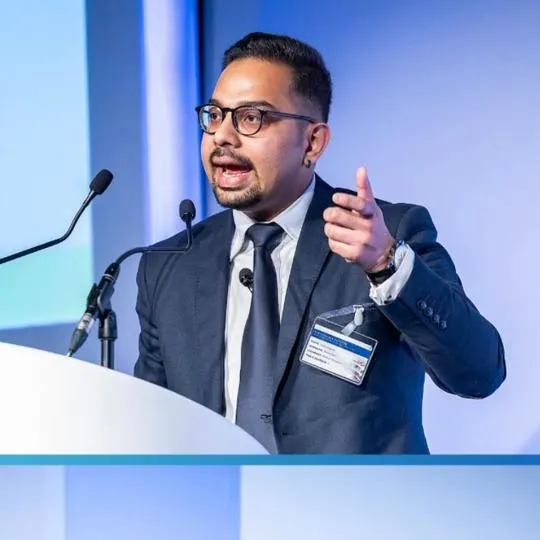
Senior Lecturer (Associate Professor) in Economics and Public Policy
Search for another event