

Biography
Dr Abirlal Mukherjee is currently a postdoctoral researcher in the Garnett Group at the Centre for Host Microbiome Interactions, King’s College London. Abirlal's career in structural biology began in 2018 as a project assistant in the Dutta Group at the Indian Institute of Science. He obtained his MSc from Banaras Hindu University and his BSc from Ramakrishna Mission Vidyamandira, Belur Math. Abirlal completed his PhD in 2025 under the supervision of Dr Saugata Hazra at the Indian Institute of Technology Roorkee, specializing in structural biology.
During his doctoral research, Abirlal investigated the structural and functional evolution of bacterial enzymes, particularly β-lactamases associated with antimicrobial resistance. His PhD research led to the identification and characterisation of two new enzymes, IITRS and AHM-1, which were featured as cover art in prestigious journals including Biochemistry and ACS Infectious Diseases.
Abirlal has almost ten years' research experience in microbial structural biology, with expertise in x-ray crystallography and cryo-electron microscopy. His current postdoctoral research focuses on understanding the structure–function relationships of bacterial secretion systems and their substrates.
Research
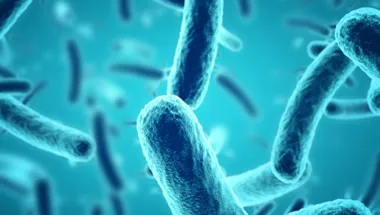
Centre for Host-Microbiome Interactions
Millions of microorganisms live in and on our bodies forming microbiomes on different surfaces. Researchers in the Centre for Host Microbiome Interactions study our relationship with these bacteria and fungi in health or in oral and systemic diseases such as periodontitis, candidiasis, oral cancer and Alzheimer’s disease.
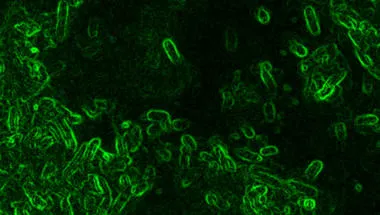
Garnett Lab
The Garnett Lab investigates molecular mechanisms that promote bacterial disease. In particular we are interested in biofilm formation and other key virulence traits that allow bacteria to establish infections and persist within the host/environment.
Research
Centre for Host-Microbiome Interactions
Millions of microorganisms live in and on our bodies forming microbiomes on different surfaces. Researchers in the Centre for Host Microbiome Interactions study our relationship with these bacteria and fungi in health or in oral and systemic diseases such as periodontitis, candidiasis, oral cancer and Alzheimer’s disease.
Garnett Lab
The Garnett Lab investigates molecular mechanisms that promote bacterial disease. In particular we are interested in biofilm formation and other key virulence traits that allow bacteria to establish infections and persist within the host/environment.