

Research & Innovation
Discover research and innovation at King's
Find out more about the world-class range of research facilities, technical services and technology platforms available at King's.
A multi-disciplinary core research facility, providing services and advice to research scientists and clinicians carrying out animal research.
Access: Applicants must complete a personal license or tissue only ethical review form, and attend an induction before they can register as a user of the Biological Services Facility. Contact the facility for details.
Training: Training is mandatory for all prospective licensees and Schedule 1 users, and is available in a modular form, consisting of theory and practical based learning. Location: Biological Services has six separate facilities across King's.
Contact: bsucentral@kcl.ac.uk
King's Health Partners Cancer Biobank can supply human samples and data for research projects. We undertake a variety of histology services, including:
The facility recently introduced a Hamamatsu S60 scanner with brightfield and fluorescence capability, offering either a complete scanning service or the option for users to scan their own slides.
Access: Contact the team at khpbiobank@gstt.nhs.uk
Training: Health, safety and operational inductions are provided before using the equipment.
Location: Innovation Hub, Cancer Centre, Great Maze Pond, London, SE1 9RT (Guy's Campus).
The Fly Facility offers fly media preparations of vials, bottles, trays and grape plates, for maintenance of lines and experiments with drosophila melanogaster as a model organism.
Access: Contact Facility Manager, Marisol Gonzalez-Melendez
Location: Room 1.23, Centre for Developmental Neurobiology, New Hunt’s House, Great Maze Pond, London, SE1 1UL (Guy's Campus).
A centre of expertise for cell characterisation, using high throughput imaging and high content analysis of cellular models. The stem cell hotel provides guidance, expert advice and bespoke services to users, including assay development and assistance in overcoming technical challenges. It advises researchers in the best practice of sample preparation for imaging, imaging expertise, analysis pipeline design and quantification of the results.
Access: Create an online registration account to access the booking system.
Training: Introductory training is provided to all new users. Bespoke training for complex cellular models is available. Individual training can be arranged based on project requirements, for those interested in qualifying as an independent user.
Location: 28th floor, Centre for Gene Therapy and Regenerative Medicine, Tower Wing, Guy’s Hospital, London SE1 9RT (Guy's Campus).
Contact: info-sch@kcl.ac.uk
King’s CL3 Facility provides specialist laboratory space for working with aerosol-transmitted pathogens under enhanced containment and biosecurity conditions.
We offer expert guidance, comprehensive training, and state-of-the-art infrastructure for regulated and high-impact infectious disease studies.
Access: Researchers are encouraged to contact us early (especially before submitting grant applications) to discuss how we can support your work.
Location: 5th Floor, Hodgkin Building, Great Maze Pond, London SE1 1UL (Guy's Campus).
Contact: Facility Manager: Andrea Zelmer
Accredited by the UK Accreditation Service (UKAS) as a testing laboratory across a range of sport. The DCC analyses both domestic and international athletes in accordance with World Anti-Doping Agency (WADA) prohibited list of substances.
Access: Contact Sample Throughput Officer, Jayla Mehmet
Location: Franklin Wilkins Building, Stamford St, London, SE1 9NQ (Waterloo Campus).
Find out more about the Drug Control Centre.
DNA@King’s is a UKAS-accredited (No. 7850) and Ministry of Justice-approved laboratory, specialising in forensic DNA analysis. It is part of King's Department of Analytical, Environmental & Forensic Sciences.
Activities include:
Led by Professor Denise Syndercombe Court, our team has over 50 years of expertise in human identification and relationship testing. We also offer CellCheck@King’s, cell line authentication and urine DNA analysis for anti-doping investigations.
The Forensic Genetics group is the main provider of population frequencies for forensic purposes in the UK and sequence population frequencies worldwide. It is one of a small group of international laboratories that are leaders in the use of massively parallel sequencing (MPS).
Our expertise also includes Y-chromosome and mitochondrial DNA testing, particularly useful in analysis of hairs and bones in criminal cases, disaster victim identification (DVI), sexual assault investigations, and genealogy research.
Access: We provide a range of specialist services to the legal and academic communities, as well as to the public. Researchers can access support in two ways:
Training: We offer a wide range of workshops and bespoke training with project opportunities.
Location: 4th floor, Franklin-Wilkins Building, 150 Stamford Street, London, SE1 9NH (Waterloo Campus).
Contact: dna.analysis@kcl.ac.uk, or Facility Manager: Lesley Nott
The GEEC facility provides state-of-the art support for any projects involving genome editing. It has a successful track record in the creation of transgenic animals. It also provides a general mouse embryology service for the cryopreservation and re-derivation of lines.
Location: New Hunt’s House, Great Maze Pond, London, SE1 1UL (Guy's Campus).
Contact: geec@kcl.ac.uk
Genomics & Biomarkers is a core research facility at King's, offering a range of high-throughput genomics and biobanking services from sample preparation to bioinformatics support.
The facility is a CSPro certified provider of Illumina's platforms and assays for genotyping and gene expression. It provides:
We have also established Oxford Nanopore's high-throughput next-generation long reads sequencing platform, PromethION, to provide whole-genome sequencing, transcriptomics and methylome sequencing.
Access:
Location: NIHR BioResource Centre Maudsley, SDGP Centre, Institute of Psychiatry, Psychology & Neuroscience (IoPPN), 16 De Crespigny Park, London, SE5 8AF (Denmark Hill Campus).
The HTS facility is equipped with state-of-the-art instrumentation to perform high-throughput and high-content functional genomics screenings using a range of libraries. The platform can accommodate cell-based screenings using diverse cell models to address a wide range of biological questions.
Access: Contact Facility Manager, Miguel Mano
Location: James Black Building, 125 Coldharbour Lane, London, SE5 9NU (Denmark Hill Campus).
The Brain Bank is based in King's Institute of Psychiatry, Psychology & Neuroscience, and works closely with King’s College Hospital. The centre is a vital resource for neuroscience research, and gives scientists access to high-quality brain and spinal cord tissue – helping to unlock new understanding of conditions like Alzheimer’s, motor neuron disease and psychosis.
Access: Contact the facility for all tissue and training enquiries: brain.bank@kcl.ac.uk
Training: The centre offers training in the use of human tissue for neuroscience techniques, neuroanatomy training and brain banking.
Location: SDGP Building, Memory Lane, Denmark Hill, London, SE5 8AF (Denmark Hill Campus).
The Mitochondrial Bioenergetics Users Facility enables users to undertake parallel analysis of the two major energy pathways in the cells (mitochondrial respiration and glycolysis), in real time. The facility enables users to quantify:
Instruments available include:
Visit Agilent for help with designing your experiments.
Access: Contact Facility Manager, Dr Hannah Rosa
Training: Training is required for access to the facility and the equipment booking system. Hands-on training is provided by Agilent and takes place over two days. For information about training, contact: Aakruti Kaikini.
Location: Hodgkin Building, Great Maze Pond, London, SE1 1UL (Guy's Campus).
Find out more about the Mitochondrial Bioenergetics Users Facility.
The Biomarker Research and Imaging for Neuroscience (BRAIN) Centre is a world-leading facility for advanced neuroimaging in experimental models of neurological and psychiatric conditions. Its core strength lies in magnetic resonance (MR) imaging, including structural, functional and spectroscopy techniques.
The centre also supports small animal brain PET scanning and a wide range of in vivo and post-mortem approaches, to give researchers a comprehensive toolkit to explore brain function and disease. These include:
Access: Contact the facility for general enquiries and costings for grant applications: brain@kcl.ac.uk
Training: The facility provides full training for uses. Assistance with imaging experiments is also possible for untrained or inexperienced staff or students.
Location: Neuroimaging, James Black Centre, 125 Coldharbour Lane, London, SE5 9NU (Denmark Hill Campus).
With years of experience in single-cell omics, the SCOP team provides high-quality services tailored to the needs of King’s and the wider research community. We specialise in single-cell sequencing technologies, utilising both microfluidics and microwell-based approaches. Our platform includes:
Additionally, we offer the BD Rhapsody, a microwell-based single-cell analysis system designed for high-efficiency targeted gene expression and multiomic profiling.
Access: Our facility offers open access to state-of-the-art equipment for single-cell research. Please contact our facility regarding access, training, and quotes.
Location: Lab 1.29A, Office 1.32A, New Hunt’s House, Great Maze Pond, London, SE1 1UL (Guy's Campus).
King’s Infectious & Inflammatory Diseases Biobank makes medical research easier, more efficient, and faster by serving as a centralised sample resource for researchers to access. It is supported by funding from the School of Immunology & Microbial Sciences (SIMS). Research across SIMS and beyond spans many areas of virology and immunology, creating a dynamic space where scientists and clinicians come together to drive translational research.
Access: Interested applicants should contact the facility to discuss the nature of their proposal. If feasible, applicants will then be asked to submit a full Biobank application form to undergo review by the Biobank Governance Committee.
Location: Borough Wing, Guy’s Hospital, London SE1 9RT (Guy's Campus).
Contact: biobank@kcl.ac.uk
Find out more about the Infections & Inflammatory Diseases Biobank.
The quantitative Polymerase Chain Reaction (QPCR) facility is part of SIMS, and has two QPCRs available for researchers to book.
Access: Bookings can be made via Clustermarket for Internal and external researchers.
Training: Training is provided on an individual basis and facilitated by experienced SIMS colleagues.
Location: 3rd Floor Borough Wing, Great Maze Pond, London, London SE1 1UL (Guy's Campus).
Contact: Facility Manager: Stelios Papaioannou, Rui Pedro Ribeiro Galao
Discover research and innovation at King's
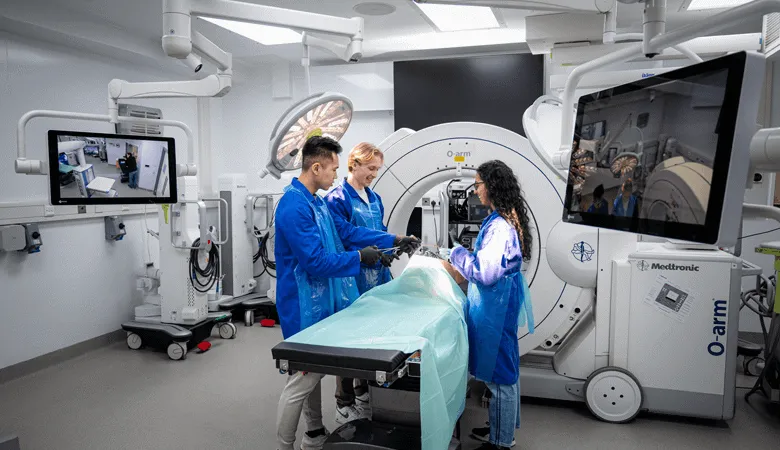
Cutting-edge facilities, technical services and technology platforms.

Our research culture and world-class research support services.