
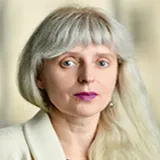
Dr Gabriele Salciute Civiliene
Senior Lecturer in Digital Humanities
- Co-Director of King's Institute for Human and Synthetic Minds
Biography
Dr Gabriele Salciute Civiliene’s interdisciplinary research explores how language, perception, knowledge and cultural memory are transformed through computational and immersive media. Working across multilingual digital humanities, extended reality (XR), cultural heritage and archives, she combines critical, computational and creative-practice approaches to examine the cultural, epistemological and phenomenological implications of digital mediation.
A connecting concept across her research is translation in an expanded sense: between languages, media, sensory modalities, historical contexts, physical and virtual spaces, and human and computational systems. Her work examines what happens to meaning, identity, experience and memory when modelled, visualised, spatialised or reconstructed through digital technologies.
Her current research spans multilingual and translational computation, critical and multisensory XR, and digital cultural heritage, archives and difficult memory, with interests in embodiment, attention, experiential differences, and the neuroaesthetics of representation.
Her interdisciplinary background encompasses art and art history, cognitive linguistics, data visualisation and computational humanities. She holds a PhD in Digital Humanities from King’s College London, where she developed computational approaches to reading literary texts and translations across languages, and an MPhil in English Linguistics from the University of Bergen, where she used corpus analysis to examine war metaphors in journalistic discourse through cognitive metaphor theory.
Research interests and PhD supervision
Gabriele welcomes enquiries from prospective doctoral researchers working across:
- Critical, ethical and multisensory XR, including embodiment, attention, perception and spatial forms of knowledge
- Digital cultural heritage, archives and cultural memory, including difficult heritage, censorship, trauma, conflict and archival interpretation
- Multilingual and translational digital humanities, including translation, translationality and cross-linguistic computational research
- Computational approaches to literature, language and culture, including AI, human–machine communication, data visualisation and epistemology
- Artistic, curatorial and practice-based research engaging with computational and immersive methods.
Her research and PhD supervision are particularly concerned with how digital and computational technologies transform the ways cultural knowledge is produced, represented, interpreted and experienced. She is especially interested in interdisciplinary and practice-based projects that bring critical humanities perspectives into dialogue with computational, immersive, artistic or curatorial methods. Across these areas, she welcomes research addressing questions of language and cultural difference, embodiment and perception, neuroaesthetics and representation, memory and difficult histories, and the changing relationships between human interpretation, technological systems and cultural materials.
Teaching
Gabriele’s research and teaching are closely integrated. She teaches theoretical and practice-based Digital Humanities, particularly in virtual and extended reality, digital cultural curation and computational practice. Her pedagogy treats digital making as a mode of critical enquiry rather than simply technical training.
Her open educational research outputs include Science Fiction Prototyping Guide to Writing about XR and VR/Unity Projects (2024). In 2026, this approach developed into a public exhibition at Science Gallery London, where fifteen immersive environments created by students on her Virtual Realities module explored questions of selfhood and technologically mediated experience, alongside curatorial work developed by students from Curating and Preserving Digital Culture.
Expertise and public engagement
Gabriele’s public engagement brings her research in digital humanities, immersive technologies and cultural heritage into dialogue with cultural and diplomatic organisations, artists, curators, creative practitioners and wider publics.
Her collaborative curatorial projects include Deep Dive: Our Immersive Selves at Science Gallery London (2026), exploring selfhood and technologically mediated experience through immersive environments, and Ukraine: Architectures of Despair and Hope at Europe House, London (2025), developed in collaboration with artists, photographers, curators and cultural partners to bring war photography, augmented reality and digitally preserved Ukrainian architecture into dialogue around cultural destruction, memory and resilience. The exhibition reached audiences beyond academia through the social media networks of participating artists and attracted members of the public and public figures, including Deborah Bull, who spoke at its opening. Her sustained engagement with Ukrainian culture and heritage also includes KCL Films for Ukraine (2022–23) and contributions to public discussion on safeguarding cultural heritage during conflict, including the London Calling EU podcast. As founder and lead of the Un.censor.ing Cultural Heritage Network, she convenes academics, artists, filmmakers, curators, activists and cultural organisations around censorship, cultural erasure, difficult memory and emerging forms of digital control. Across exhibitions, public events, podcasts, expert discussions and international collaborations, her engagement connects research on XR, AI, multilingualism and digital cultural heritage with wider debates about technology, cultural memory and the ethics of representation.
Selected publications
- Salciute Civiliene, G. (2027). “Metabolism.” In Matthew Reynolds (ed.), Translationality. Oxford University Press.
- Salciute Civiliene, G. (2026). “Building Self/Resilience, Community, Field, and Institution in Emergency Conditions.” In S. Burrows, I. Baird and A. Montoya (eds.), Building Digital Humanities, 2 vols. Radboud University Press.
- Salciute Civiliene, G. (2024). Science Fiction Prototyping Guide to Writing about XR. King’s College London.
- Salciute Civiliene, G. (2022). “The Sound and Voice of Violent Things: Against the Silence of Data Visualization.” In Perspectives on Data. Art Institute of Chicago.
- Salciute Civiliene, G. (2021). “VR Ethnography: Transcultural Reimagining of William Faulkner’s Topographies of The Sound and the Fury.” AMPS Proceedings Series.
- Salciute Civiliene, G. (2021). “Data Artification.” In Advances in Design and Digital Communication. Springer.
- Salciute Civiliene, G. (2020). “Modelling Translation as a Theatre of the Mind: Reporting Clauses and Inward Affect.” Signum: Estudos da Linguagem.
- Salciute Civiliene, G. (2020). “Between Surface and Depth: Towards Embodied Ontologies of Text Computing across Languages.” Interdisciplinary Science Reviews.
Research
King's Institute for Human and Synthetic Minds
Stronger scientific, historical, social and cultural understanding of intelligence

Centre for the Ecologies of Attention and Perception
Forging new responses to the foundational digital age crisis: distraction

Computational Humanities Research Group
Computational Humanities research group

King's Centre for Integrative Chinese Medicine
King's Centre for Integrative Chinese Medicine is a research-focused initiative of the King’s Health Partners (KHP) primarily led by King’s College London, aiming to catalyse innovation through an Integrative Chinese Medicine (ICM) approach.

Un.censor.ing: Cultural Heritage Network
The Un.censor.ing Network seeks to provide space and opportunities for researchers, artists, filmmakers, activists, and policy makers to create, advance, and disseminate scholarship concerned with the matters of censorship.
News
Exhibition of immersive Virtual Reality (VR) environments by Digital Humanities students opens at Science Gallery London.
The fifteen immersive works in this exhibition were made by undergraduate students as part of the Virtual Realities module led by Dr Gabriele Salciute...

'Never want to leave': pioneering project to investigate multisensory extended reality
The project led by Professor Joanna Zylinska will create a new arts and humanities‑led field of Multisensory XR that critically reimagines how immersive...

Digital Futures Institute announces eleven new Fellows for 2025-26
Eleven interdisciplinary projects awarded Fellowships from the Digital Futures Institute for the 2025-26 cohort.
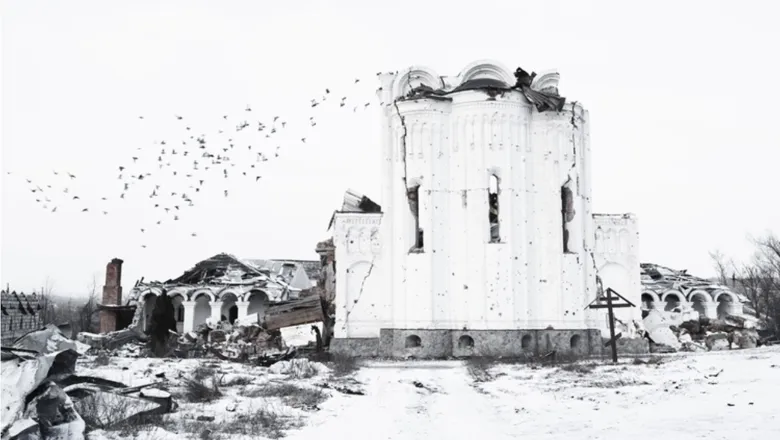
'Despair and hope': new exhibition shows Ukraine's architecture safeguarded through technology
‘Ukraine: Architectures of Despair and Hope’ gives a glimpse of destroyed cultural and residential architecture of Ukraine since 24 February 2022.
Events

King's Institute for Human and Synthetic Minds Creativity Clinic
Creativity clinic for King's staff and students

Ecologies of Attention and Perception
Please join us for the celebration of the re-launch of the Centre for the Ecologies of Attention and Perception at King’s College London.
Please note: this event has passed.

Futures of Mind
King's Institute for Human and Synthetic Minds - Futures of Mind
Please note: this event has passed.
Ukraine: Architectures of Despair and Hope
The exhibition brings together photography and 3D visualization to give a glimpse of destroyed cultural and residential architecture of Ukraine since Russia’s...
Please note: this event has passed.
Attention and Perception in XR: A hybrid symposium
This symposium brings together scholars and creatives to discuss the problem of attention and perception in XR, and explore what XR means for us at this...
Please note: this event has passed.
Yesterday and Forever (1984)
Screening of Yesterday and Forever with the introduction by film critic, curator, and culture columnist Monika Gimbutaitė.
Please note: this event has passed.
Features
Creativity Clinic
Creativity Clinic is a monthly event by King's Institute for Human and Synthetic Minds that help staff and students on their creative projects. It is hosted...

Responses to "The Philosophising Brain"
Responses to "The Philosophising Brain", a discussion between Professor Zucca, Professor Turkheimer and Dr Goldway that was published as a feature on the...

Research
King's Institute for Human and Synthetic Minds
Stronger scientific, historical, social and cultural understanding of intelligence
Centre for the Ecologies of Attention and Perception
Forging new responses to the foundational digital age crisis: distraction
Computational Humanities Research Group
Computational Humanities research group
King's Centre for Integrative Chinese Medicine
King's Centre for Integrative Chinese Medicine is a research-focused initiative of the King’s Health Partners (KHP) primarily led by King’s College London, aiming to catalyse innovation through an Integrative Chinese Medicine (ICM) approach.
Un.censor.ing: Cultural Heritage Network
The Un.censor.ing Network seeks to provide space and opportunities for researchers, artists, filmmakers, activists, and policy makers to create, advance, and disseminate scholarship concerned with the matters of censorship.
News
Exhibition of immersive Virtual Reality (VR) environments by Digital Humanities students opens at Science Gallery London.
The fifteen immersive works in this exhibition were made by undergraduate students as part of the Virtual Realities module led by Dr Gabriele Salciute...
'Never want to leave': pioneering project to investigate multisensory extended reality
The project led by Professor Joanna Zylinska will create a new arts and humanities‑led field of Multisensory XR that critically reimagines how immersive...
Digital Futures Institute announces eleven new Fellows for 2025-26
Eleven interdisciplinary projects awarded Fellowships from the Digital Futures Institute for the 2025-26 cohort.
'Despair and hope': new exhibition shows Ukraine's architecture safeguarded through technology
‘Ukraine: Architectures of Despair and Hope’ gives a glimpse of destroyed cultural and residential architecture of Ukraine since 24 February 2022.
Events
King's Institute for Human and Synthetic Minds Creativity Clinic
Creativity clinic for King's staff and students
Ecologies of Attention and Perception
Please join us for the celebration of the re-launch of the Centre for the Ecologies of Attention and Perception at King’s College London.
Please note: this event has passed.
Futures of Mind
King's Institute for Human and Synthetic Minds - Futures of Mind
Please note: this event has passed.
Ukraine: Architectures of Despair and Hope
The exhibition brings together photography and 3D visualization to give a glimpse of destroyed cultural and residential architecture of Ukraine since Russia’s...
Please note: this event has passed.
Attention and Perception in XR: A hybrid symposium
This symposium brings together scholars and creatives to discuss the problem of attention and perception in XR, and explore what XR means for us at this...
Please note: this event has passed.
Yesterday and Forever (1984)
Screening of Yesterday and Forever with the introduction by film critic, curator, and culture columnist Monika Gimbutaitė.
Please note: this event has passed.
Features
Creativity Clinic
Creativity Clinic is a monthly event by King's Institute for Human and Synthetic Minds that help staff and students on their creative projects. It is hosted...
Responses to "The Philosophising Brain"
Responses to "The Philosophising Brain", a discussion between Professor Zucca, Professor Turkheimer and Dr Goldway that was published as a feature on the...