Explore the Exciting World of Genetics
Genetics is a fast-moving and rapidly expanding field that is transforming medicine, agriculture, biotechnology, and biomedical research—and shaping the world around us. From improving health outcomes to developing new crops and biotechnologies, genetics impacts our daily lives in profound ways.
At the heart of this field is DNA—the genetic material that carries the instructions for life. Geneticists investigate how DNA is replicated, repaired, and decoded to produce proteins and other molecules within cells and tissues. These processes influence the physiology, behaviour, and well-being of all living things. Genetics provides a framework for understanding life at every scale, from viruses and microorganisms to plants, animals, and humans.
Molecular Genetics
Molecular Genetics focuses on inherited characteristics at the molecular level. By studying DNA and RNA structure, sequences, modifications, and other factors that influence gene activity, molecular geneticists uncover the mechanisms that drive life itself.
Genomics
Genomics is an emerging area that uses cutting-edge technologies to study the function and activity of the complete set of genes in any organism, from bacteria to humans. This field is revolutionizing healthcare, enabling personalized diagnosis and treatment based on an individual’s genetic information.
The Impact of Genetics
Genetics touches nearly every aspect of science and society. Understanding DNA and gene function provides tools for genome editing, genetic engineering, and the development of novel therapies. Our programs equip students with the knowledge and skills to take advantage of the career opportunities created by revolutionary advances in Genetics and Genomics.
Join us and be part of the next generation of scientists shaping the future of life on Earth.
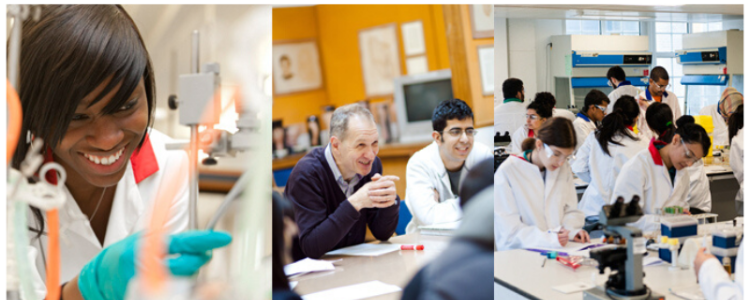
Why study Genetics at King's?
- Integrated Learning: Our programmes combine theory with hands-on research, giving you a comprehensive understanding of Genetics in practice.
- Proven Student Satisfaction (Data for students graduating 2024-25):
- 90% were positive about the teaching on the course.
- 92% Staff are good at explaining things
- 100% The course is often intellectually stimulating.
- 92% The course often challenges me to achieve my best work.
- Tailored Programmes: Our modules are designed to meet the needs of students interested in diverse fields, including biomedical research, biotechnology, and medicine.
- Cutting-Edge Opportunities: Learn directly from our research-active staff and gain exposure to the latest discoveries in Genetics.
- State-of-the-Art Techniques: Our courses leverage our strengths in biomedical research to provide practical experience with modern techniques and technologies.
Welcome to the Department of Genetics
We are proud to be part of the University where pioneering work on the structure of DNA, the molecule at the heart of Genetics, was conducted. The Department of Genetics at King’s College London is dedicated to delivering world-class education enriched with practical experience.
Our mission is to train students to become the researchers, innovators, and leaders of tomorrow, or to equip them with analytical and scientific skills that are valued across a wide range of careers. We are proud to have been rated the top Department at King’s for teaching satisfaction in the National Student Survey for the last four years.
UCAS Code: Not applicable. Apply direct to King's.
Duration: One year
Healthcare Genetics and Genomics Intercalated BSc online prospectus
View course
UCAS Code: C400
Duration: Three years, or four years with a year abroad or extra-mural year, or four years with transfer to MSci
Study for the BSc Molecular Genetics degree in the School of Bioscience Education at King's College London.
View course